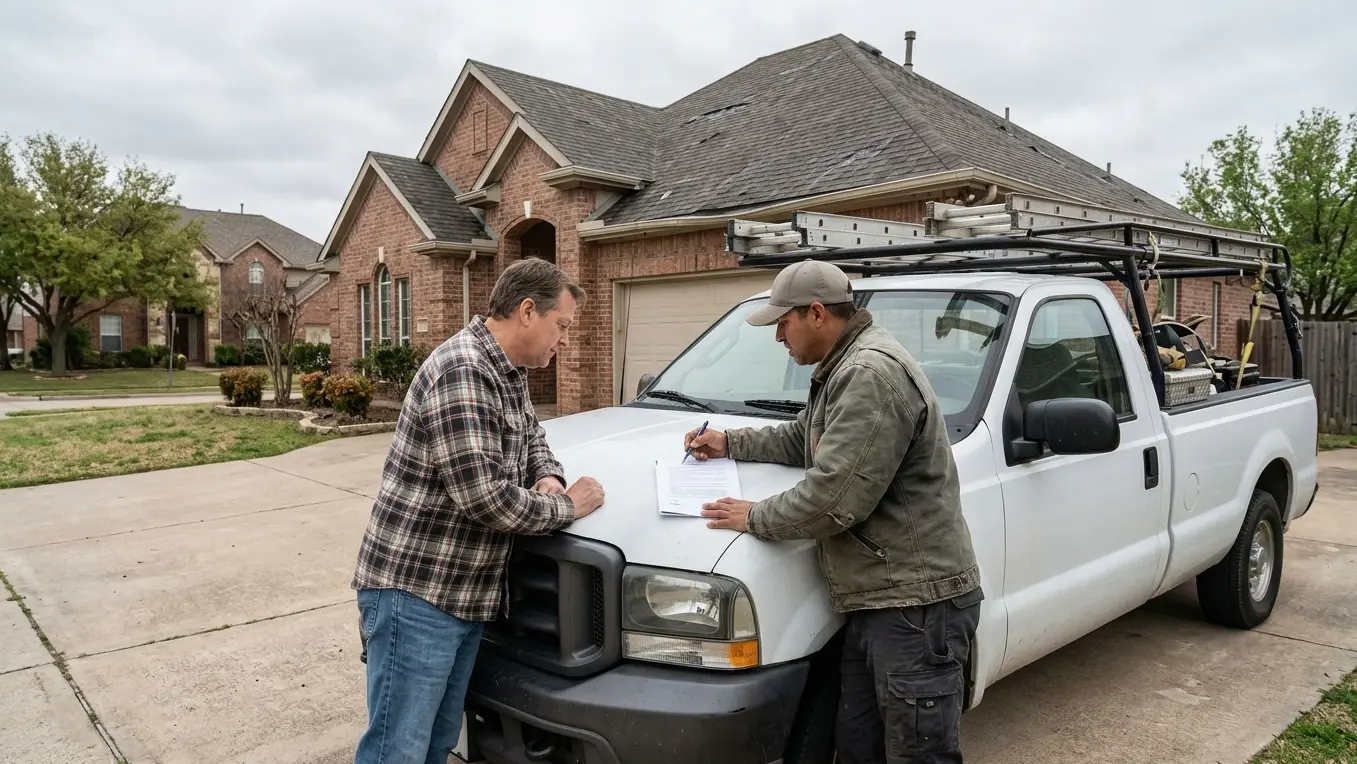
Why the weeks after a hailstorm are risky
When hail hits a big part of the metro, demand for roof work jumps overnight. Crews and sales teams from out of state follow the storms, and within days you'll see yard signs, door hangers and trucks with unfamiliar plates in every neighborhood. Some do decent work. Others collect deposits or insurance money, rush through jobs and leave town before the first leak shows up.
The trouble is that a storm chaser and a local crew can look the same at the front door. Both have shirts, trucks and tablets with photos. The difference shows up in the details you can check: where they're based, what they put in writing and how they handle permits and money. A little homework in the first week saves a lot of grief later.
Hail damage also tempts people to hurry. A ceiling stain makes every day feel urgent, and a salesperson with a contract ready to sign can look like the fastest fix. If the roof is actively leaking, get a tarp on it first. That buys you the time to choose the permanent contractor carefully.
Check for a real local address
Ask for the company's physical address in the Dallas area, then look it up. A real office or shop is a good sign. A mailbox store, a hotel or an address that turns out to be an empty lot is not. Check how long the company's local phone number and website have been around, and whether past customers in North Texas mention them by name. Searching the company name along with words like complaint or lawsuit is a quick way to see if anything stands out.
Ask for addresses of roofs they've done in or near your neighborhood, ideally a few years old, and drive by. A company that will still be here when your roof needs a warranty call or a repair after the next storm is worth more than one offering the lowest price this week. Also ask for proof of general liability coverage, so damage to your house or a neighbor's isn't left in your lap.
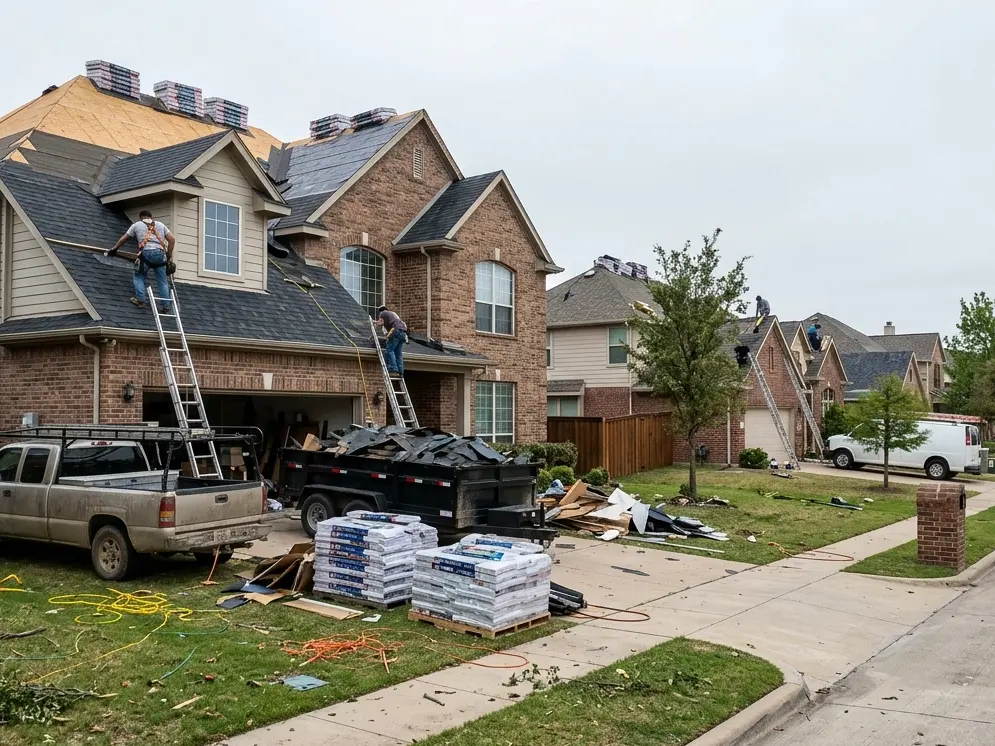
Get everything in writing
A roof replacement is a large contract and should read like one. Don't accept a handshake, a one-line estimate or a promise to work out details later. If a salesperson won't leave the contract with you overnight to read, that alone is a reason to pass. Before you sign, the contract should spell out:
- The company's full legal name, local address and phone number
- The full scope: tear-off, decking repair pricing, underlayment, flashing, vents, drip edge and cleanup
- The exact shingle or metal product, line and color
- The total price and how insurance supplements or changes will be handled
- A payment schedule tied to work completed, not a large payment before materials arrive
- Start and completion estimates, and who to call with problems
The permit goes in the contractor's name
A full reroof in Dallas needs a city building permit, and most surrounding cities require one too. The permit should be pulled by the roofing company, in its own name, before work begins. That ties responsibility for the work to the company and gives you a public record that the roof was replaced properly.
If a contractor asks you to pull the permit as the homeowner, or says it isn't needed for a full replacement, take that as a warning. It often means they can't pull it themselves or would rather not be on record. Ask to see the permit number before the tear-off starts, and you can look it up yourself on the city's permit search.
The deductible rule
Texas Insurance Code Chapter 707 makes it illegal for a contractor to waive, absorb or rebate your insurance deductible. You'll still hear offers that dance around it: a yard sign payment that matches the deductible, a marketing bonus, a discount that only exists if you file a claim. They all have the same effect, and they put you and your claim at risk.
A crew willing to break this rule to win the job is likely to cut corners elsewhere, usually on underlayment, flashing or decking, where you can't see it once the shingles are down. The deductible is your share of the real cost of the roof. Plan for it, and choose a company that writes the contract honestly. If you're unsure whether an offer crosses the line, ask your agent or carrier before you sign.
Insurance checks and what you sign
Insurance payments for a roof are often made out to you and your mortgage company together. That's normal, and the lender may hold funds until work is complete. Never endorse a full insurance check over to a contractor before the work is done, and don't sign anything that hands a contractor control of your claim without reading it carefully and understanding how to cancel. Be especially careful with anything called an assignment of benefits, which can give a contractor the right to deal with your insurer directly.
Some contractors use a contingency agreement, which commits you to them if the claim is approved. Read it slowly, ask what happens if you want a different contractor and keep a copy. Pay in stages as work is completed, and get a final invoice and lien release when the job is done. If you'd like to see how we write our contracts after a storm, call us at (214) 910-6728.
Questions to ask at the door
Keep a short list by the front door during storm season. A good crew answers these without hesitation, and writing down what each company says makes it easier to compare later:
- Where is your local office, and can I visit it?
- Who will pull the permit, and in whose name?
- Will the same crew be on my roof from start to finish?
- How do you handle decking that turns out to be damaged?
- Who do I call if the roof leaks a year from now?
Questions homeowners ask
How long should I wait to hire a roofer after a hailstorm?
You don't need to rush, but don't wait months either. Take a week or two to get the damage documented, file the claim and compare a few local companies. Your policy has a reporting deadline, so start the claim early, then choose a roofer once you've checked addresses, contracts and references.
Is it a bad sign if a roofer knocks on my door first?
Not by itself. Local crews canvass after storms too. What matters is what happens next. Be wary of pressure to sign that day, offers to cover your deductible, vague contracts or a crew that can't give you a local address. A solid company is fine leaving a card and letting you check them out.
What is a lien release and why do I need one?
A lien release is a written statement that the contractor, and often its suppliers, have been paid for your job and won't file a claim against your property. Ask for it with the final invoice. It protects you if a roofer doesn't pay its material supplier, which can otherwise come back to the homeowner.