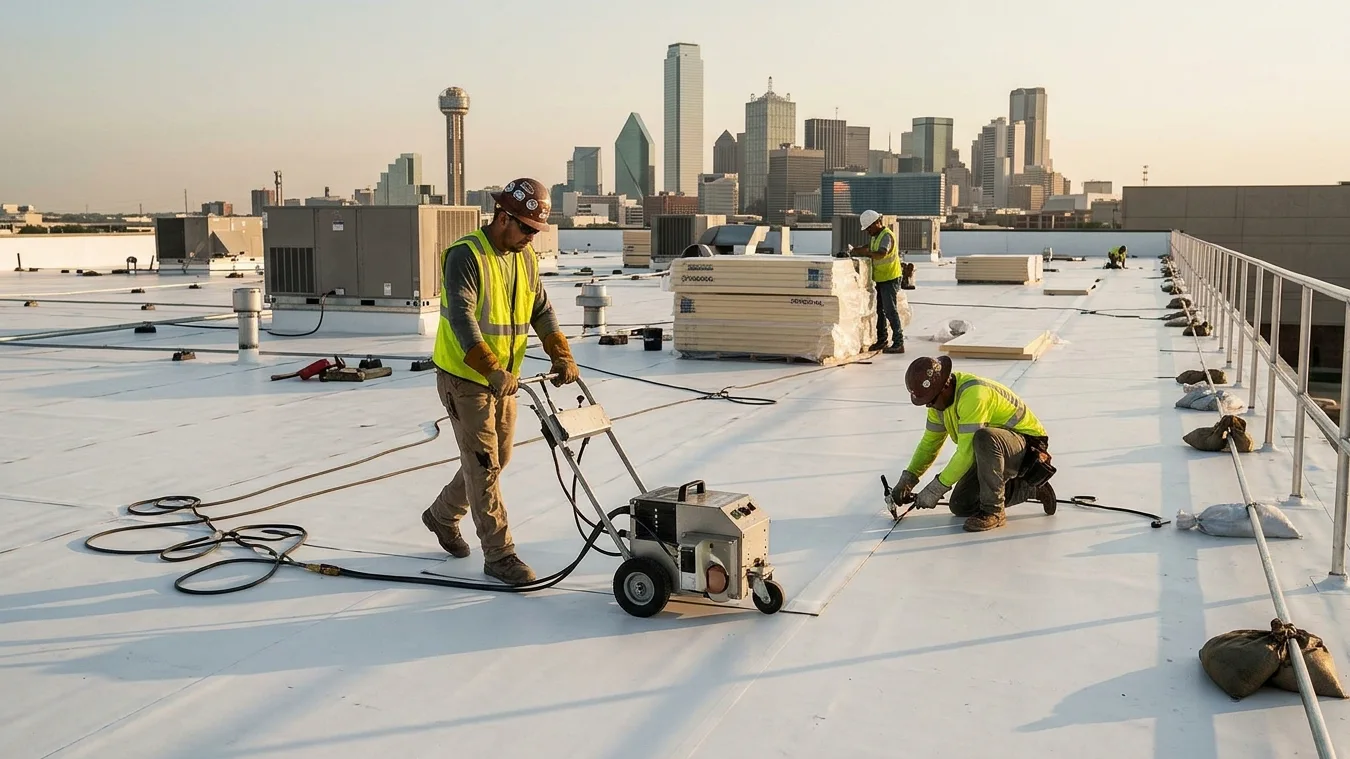
TPO roofing is a white thermoplastic single-ply membrane installed over insulation on low-slope commercial roofs, with seams welded by hot air. It suits buildings that need a reflective, cost-effective replacement or new roof. In Dallas, a full TPO system with tear-off and insulation typically runs about $7.45 to $13.40 per square foot, depending on thickness and attachment method.
TPO has become the most common single-ply membrane on new and replacement commercial roofs around Dallas, and for good reason. The white surface reflects a large share of the sun's heat, which matters on a building that cooks under summer sun for months. Seams are welded with hot air into a single sheet, so there is no glue or tape to dry out at the laps. It goes down quickly, which keeps tear-off sections short on occupied buildings.
The details make or break a TPO roof. Membrane thickness, how it is attached, what insulation sits beneath it, and how cleanly seams and flashings are welded all decide how the roof performs over the years. We install TPO on retail centers, office buildings, warehouses, churches and apartment complexes, and we walk owners through each choice: 60 mil or 80 mil, mechanically attached or fully adhered, and how much ISO and tapering the roof needs to drain properly.
When a TPO system makes sense
- Aging roof past repair: A built-up, mod bit or EPDM roof with wet insulation and repeat leaks is ready for a new system.
- High summer cooling bills: Dark roofs on warehouses and retail spaces drive up HVAC load all summer long.
- Recover opportunity: A single existing layer with dry insulation can sometimes be covered with TPO without full tear-off.
- Drainage problems: Ponding areas that need tapered insulation added during replacement to move water to drains.
- Occupied building: Tenants or residents need the roof replaced in short daily sections with minimal disruption.
- Hail-damaged single-ply: Fractured or punctured older TPO, PVC or EPDM after a storm that the insurer is covering.
Our TPO installation steps
- We take cores to confirm the deck type, existing layers and insulation condition before deciding on tear-off or recover.
- Old roofing is removed in sections small enough to dry in by day's end, and damaged deck is repaired.
- Polyiso insulation goes down in the specified thickness, with tapered boards and crickets steering water toward drains.
- The membrane is mechanically fastened in the seams or fully adhered to the insulation, depending on wind and building needs.
- Every seam is hot-air welded and probed, and flashings at walls, curbs and drains are welded in matching membrane.
- Edge metal, coping and termination bars are installed, and the finished roof is walked with the owner or manager.
TPO on Dallas commercial buildings
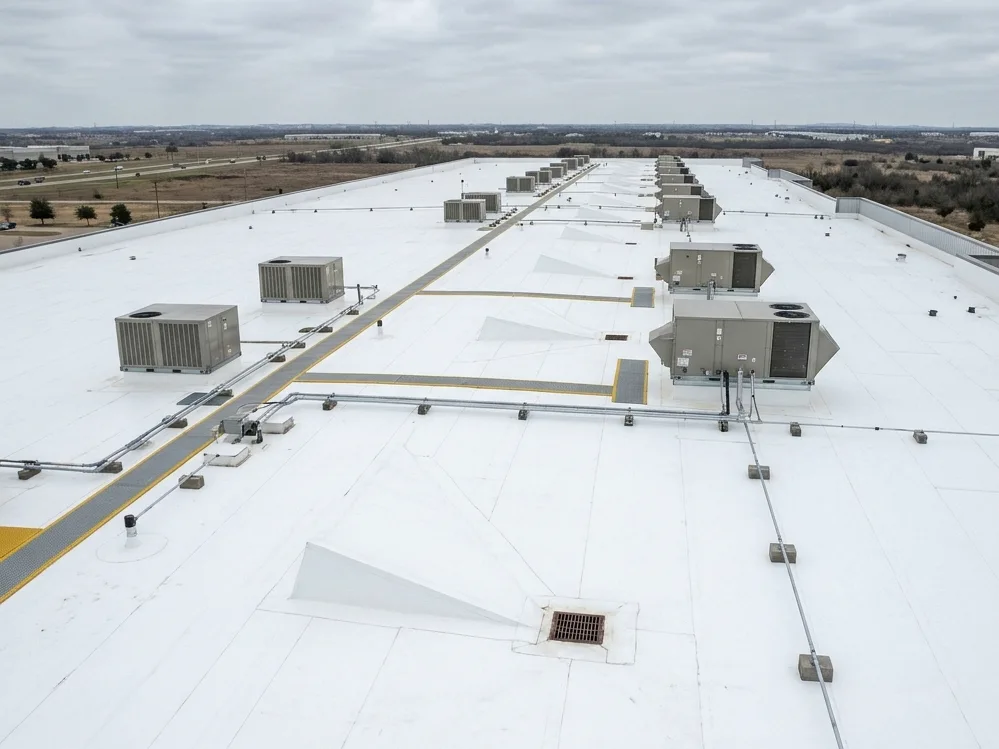
Reflectivity is the headline benefit in North Texas. A white TPO surface stays much cooler than a black membrane or gravel roof in the afternoon sun, which helps rooftop units and lowers the heat load on top-floor tenants. Dust, pollen and traffic dull that white over time, so a periodic cleaning keeps it working. On warehouses and big box spaces, the difference can show up on cooling bills through the long Dallas summer.
Hail is the main risk. TPO handles moderate hail well when it sits over firm insulation, but large stones can fracture the membrane, especially over soft or wet board. That is one reason we often recommend 80 mil membrane and a high-density cover board on Dallas roofs, since the extra thickness and firmer base resist bruising. After hail season, which runs roughly March through June, we can document any membrane damage for the building's insurance carrier.
TPO thickness and attachment options
TPO systems vary in membrane thickness and in how the sheet is held to the building. Each combination carries a different price, wind rating and hail tolerance, so the choice should follow the building. These are the configurations we install most often on Dallas commercial roofs.
| Configuration | Best for | What to know |
|---|---|---|
| 60 mil mechanically attached | Budget replacements on warehouses and strip centers | Fastened at the seams; lowest cost, but the sheet can flutter in high wind |
| 80 mil mechanically attached | Larger buildings that want more hail tolerance | Extra thickness resists punctures and adds service life for a modest added cost |
| 60 or 80 mil fully adhered | Offices, churches and high-wind exposures | Glued to the insulation with no flutter; smoother look and better wind resistance |
| TPO with HD cover board | Roofs with foot traffic or heavy hail exposure | Firm board under the membrane spreads impacts and protects the ISO |
| TPO recover over existing roof | One existing layer with dry insulation | Saves tear-off cost; needs cores to confirm the old roof is dry |
What tpo roofing costs in Dallas
| 60 mil mechanically attached, per sq ft | $7.45 to $10.20 |
| 80 mil fully adhered, per sq ft | $9.65 to $13.40 |
| Tapered ISO insulation, per sq ft added | $1.65 to $3.85 |
| High-density cover board, per sq ft | $0.85 to $1.70 |
| Curb or penetration flashing, each | $165 to $485 |
Membrane thickness, attachment method and insulation thickness are the biggest price levers. Tapered ISO costs more than flat board but solves ponding. Tear-off of multiple layers, deck repairs, parapets and the number of rooftop units add labor. Recovers over a dry existing roof cost less than full replacement. Fully adhered systems cost more than mechanically attached ones because of adhesive and labor.
How the job runs
Call
Talk to us about the building. Tell us the building type, roof size, current membrane and whether there is an active leak, and we schedule a survey.
Survey
Core cuts and moisture. We walk the roof, check seams, drains and edges, take core samples where needed and map wet insulation.
Propose
Options with numbers. Repair, coating, recover or full replacement are priced side by side so owners and managers can plan the budget.
Schedule
Work around tenants. We plan staging, noise and access around business hours, and pull any permit the city requires.
Install
Membrane and details. Crews install insulation, membrane and flashing details, then water-test drains and transitions.
Close
Turnover package. You receive photos, material data and maintenance notes for the building file.
TPO Roofing questions
Is 80 mil TPO worth the extra cost over 60 mil in Dallas?
On many Dallas buildings, yes. The added thickness resists hail bruising and punctures from foot traffic and dropped tools, and it gives the membrane more material to weather before it wears thin. The price difference is usually a modest share of the total project. For roofs with frequent service visits or heavy hail exposure, 80 mil is often the better long-term value.
What is the difference between mechanically attached and fully adhered TPO?
Mechanically attached TPO is fastened through the insulation into the deck along each seam, which is faster and less expensive. Fully adhered TPO is glued to the insulation across the entire sheet, so it does not flutter in wind and resists uplift better. Adhered systems also look smoother. We recommend based on building height, wind exposure, deck type and budget.
How much insulation goes under a new TPO roof?
It depends on the energy code that applies when the roof is replaced and on the building's needs, but most Dallas commercial reroofs get several inches of polyiso. Where water ponds, we add tapered ISO and crickets so the roof drains toward outlets. We size the insulation during the estimate and show where tapering is planned.
Does a white TPO roof stay white?
It starts bright white and dulls over time as dust, pollen and foot traffic settle on the surface, especially in a dry, windy Dallas spring. The membrane still reflects much more heat than a dark roof even when dirty. A gentle cleaning every year or two restores much of the reflectivity, and it is a good chance to look over seams and flashings.