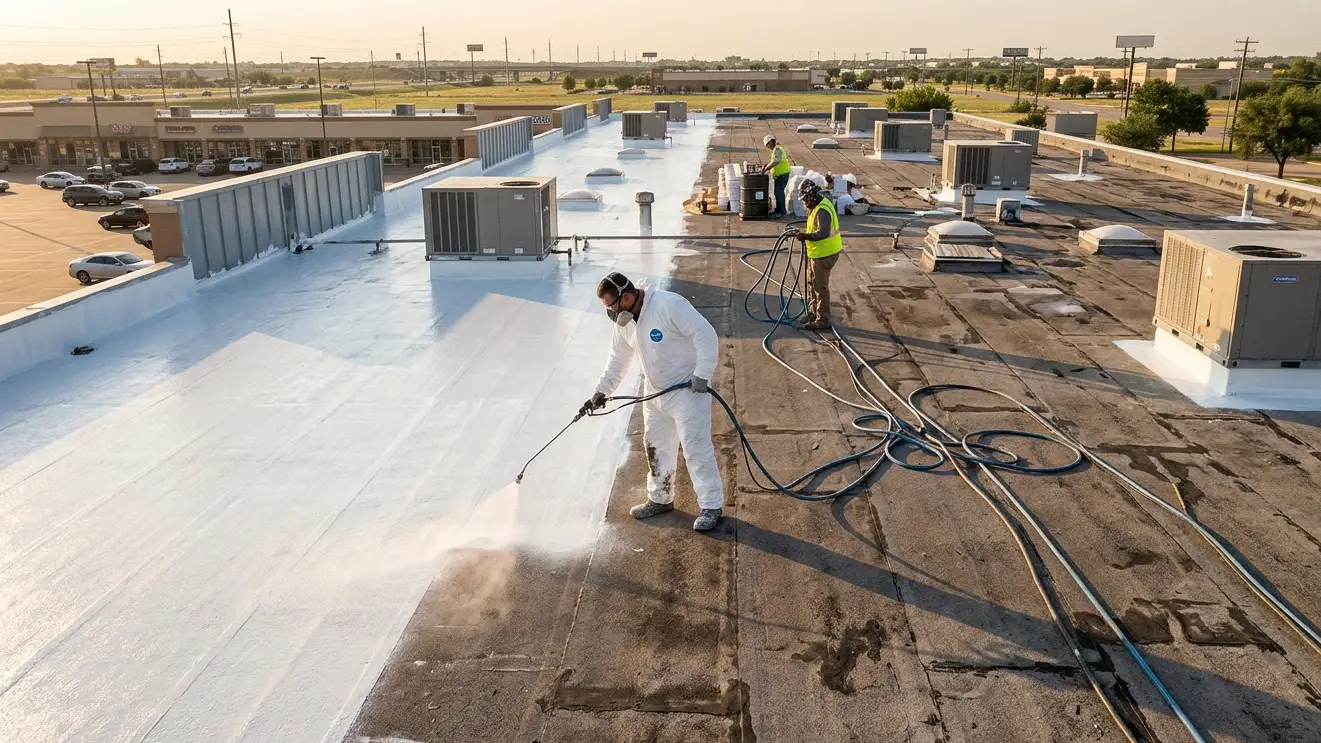
Roof coatings are fluid-applied silicone or acrylic layers applied over an existing commercial roof to seal, reflect heat and extend service life. They work only on roofs with dry insulation and a sound base. In Dallas, a full restoration coating typically costs about $2.85 to $5.65 per square foot, roughly a third to half the price of replacement.
A restoration coating is a fluid-applied membrane rolled or sprayed over an existing low-slope or metal roof. Done on the right roof, it seals small cracks and seams, reflects the sun, and buys a building owner years before replacement. Done on the wrong roof, it traps water in wet insulation and hides problems until they become far more expensive. The difference lies entirely in the preparation and the honest assessment that comes before any coating goes down.
We coat TPO, EPDM, modified bitumen, built-up and metal roofs on retail buildings, warehouses, churches, offices and apartment complexes across Dallas. Every coating job starts with moisture readings and core cuts. Wet areas are cut out and replaced, seams and flashings are reinforced with fabric, and the roof is cleaned before primer and coating go on. Owners get the moisture data and our recommendation, including when coating is not the right answer.
Signs a coating could work for your roof
- Aging but dry roof: Cores and moisture scans show the insulation is mostly dry even though the surface is worn.
- Weathered membrane surface: Mod bit has lost granules, TPO has chalked, or EPDM shows surface crazing.
- Rusting metal roof: Corroded fasteners and panel laps on a metal building that is otherwise structurally sound.
- High cooling costs: A dark roof is driving up HVAC loads all summer, and reflectivity would help.
- Repair budget, not replacement budget: The owner needs several more years from the roof before a full replacement is affordable.
- Minor leaks at seams and details: Small, scattered leaks at laps and penetrations rather than widespread failure.
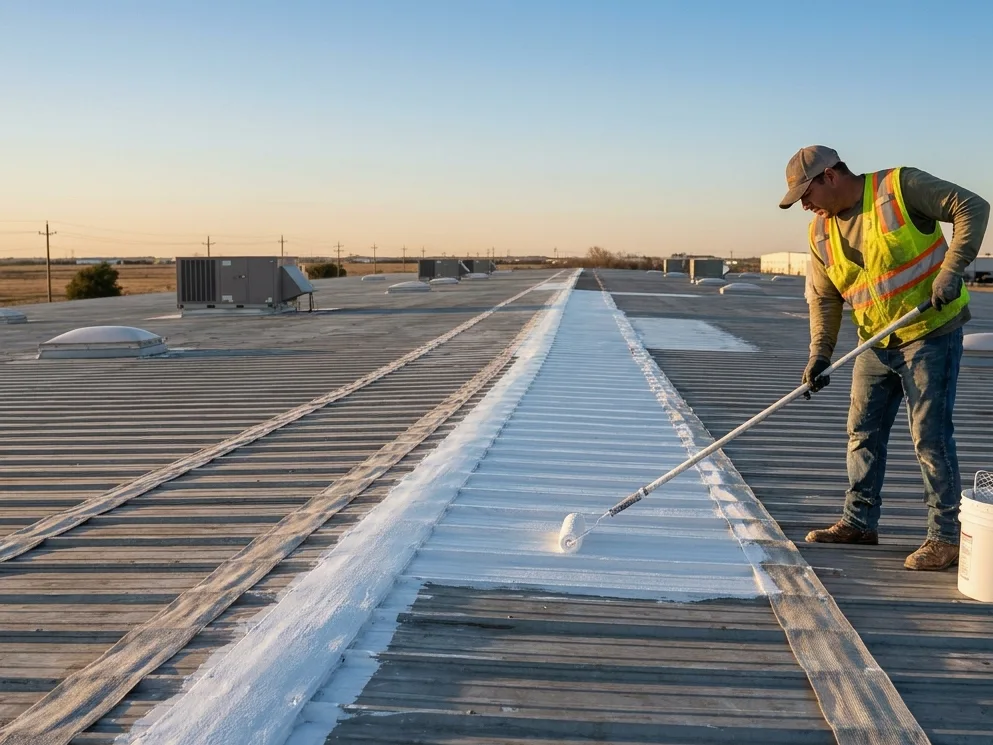
Steps in a coating restoration
- We scan the roof for moisture and take core samples to confirm the insulation and base membrane are dry and firmly attached.
- Wet sections are cut out and replaced with new insulation and matching membrane before any coating is applied.
- The roof is pressure washed or cleaned to remove dirt, chalking and loose granules, then allowed to dry completely.
- Seams, fasteners, penetrations and flashings are reinforced with polyester fabric embedded in base coat.
- Primer goes on where the substrate needs it, followed by silicone or acrylic coating at the specified thickness.
- We check thickness with wet mil gauges during application and walk the finished roof with the owner or manager.
Coatings in the North Texas climate
Silicone and acrylic coatings behave differently in Dallas weather. Silicone handles standing water well, so it suits roofs with some ponding that cannot be fully corrected, and it holds up to strong UV. It also collects dust more readily and can be harder to recoat with other products. Acrylic is less expensive and stays cleaner and brighter, but it does not tolerate ponding water and needs dry weather above certain temperatures to cure properly.
Timing matters here. Spring storms can interrupt coating schedules, and acrylic in particular needs a dry forecast to cure before rain. Summer heat speeds curing but can make application tricky in the afternoon sun. After hail season, coating a sound roof can renew its surface, but hail-fractured membranes must be repaired first. We plan coating work around the forecast and the roof's specific conditions so the coating cures properly the first time.
Coating types compared
Each coating chemistry suits different roof types and drainage conditions. The choice affects cost, how the roof handles ponding water, how bright it stays, and what can be applied over it later. Here is how the main types compare on Dallas roofs.
| Coating | Best for | What to know |
|---|---|---|
| Silicone | Roofs with some ponding and strong sun | Handles standing water and UV well; collects dust and is difficult to recoat with other chemistries |
| Acrylic | Well-drained roofs and budget restorations | Lower cost and stays brighter; does not tolerate ponding and needs dry weather to cure |
| Aliphatic urethane | Roofs with foot traffic or impact concerns | Tough, abrasion-resistant surface; higher cost and stronger odor during application |
| SEBS or rubber-based | Mod bit and built-up roofs | Bonds well to asphalt surfaces; usually topped with a reflective layer |
| Metal roof restoration system | Rusted metal buildings | Rust treatment, fastener sealing and seam fabric before coating the whole roof |
What roof coatings costs in Dallas
| Moisture survey with core cuts | $435 to $1,165 |
| Acrylic coating system, per sq ft | $2.85 to $4.35 |
| Silicone coating system, per sq ft | $3.45 to $5.65 |
| Wet insulation cut-out before coating, per sq ft | $6.15 to $10.95 |
| Seam and fastener fabric reinforcement, per linear foot | $2.15 to $4.60 |
Coating type and thickness set the base price, with silicone and urethane above acrylic. Prep work moves the total most: the amount of wet insulation to cut out, seam and fastener reinforcement, and cleaning heavy dirt or loose granules. Metal roofs with heavy rust need extra treatment. Access, rooftop equipment and roof height also affect labor.
How the job runs
Call
Talk to us about the building. Tell us the building type, roof size, current membrane and whether there is an active leak, and we schedule a survey.
Survey
Core cuts and moisture. We walk the roof, check seams, drains and edges, take core samples where needed and map wet insulation.
Propose
Options with numbers. Repair, coating, recover or full replacement are priced side by side so owners and managers can plan the budget.
Schedule
Work around tenants. We plan staging, noise and access around business hours, and pull any permit the city requires.
Install
Membrane and details. Crews install insulation, membrane and flashing details, then water-test drains and transitions.
Close
Turnover package. You receive photos, material data and maintenance notes for the building file.
Roof Coatings questions
How do you know if my roof is a good candidate for a coating?
We take moisture readings across the roof and confirm them with core cuts. If the insulation is mostly dry and the membrane is firmly attached, a coating can work. If more than a modest share of the roof is wet, or the base membrane is failing broadly, coating would trap moisture and replacement is the honest recommendation. You see the data either way.
Should I choose silicone or acrylic for my Dallas building?
If your roof holds water in spots that cannot be corrected with drains or crickets, silicone is generally the better pick because it tolerates ponding. If the roof drains well and you want a lower price and a brighter surface, acrylic is often a good fit. Roof type, budget and what you might apply in the future also factor in.
Can a coated roof be coated again later?
Yes, with the right prep. Recoating usually means cleaning, repairing any damaged areas, and applying a compatible product at the right thickness. Silicone typically needs silicone over it, since most other products do not bond well. Planning for recoat from the start keeps future options open and costs predictable.
Will a roof coating hold up to Dallas hail?
Coatings add a protective layer, but they do not make a roof hail-proof. Large hail can still damage the membrane and insulation beneath a coating, and some coated surfaces show scuffs or cuts after a storm. After hail, we inspect the coated roof, repair any damage, and touch up the coating so the system keeps sealing and reflecting.