Junius Heights is a City of Dallas historic district on the eastern side of Old East Dallas, running toward Lakewood around Gaston Avenue, Abrams Road and the streets that cross them. Most houses were built between the 1910s and the 1930s, and the neighborhood holds one of the city's largest groups of Craftsman bungalows: one-and-a-half story homes with low front gables, tapered porch columns, knee braces under the eaves and shed or gabled dormers. The Lakewood Theater and nearby shops are a short walk east.
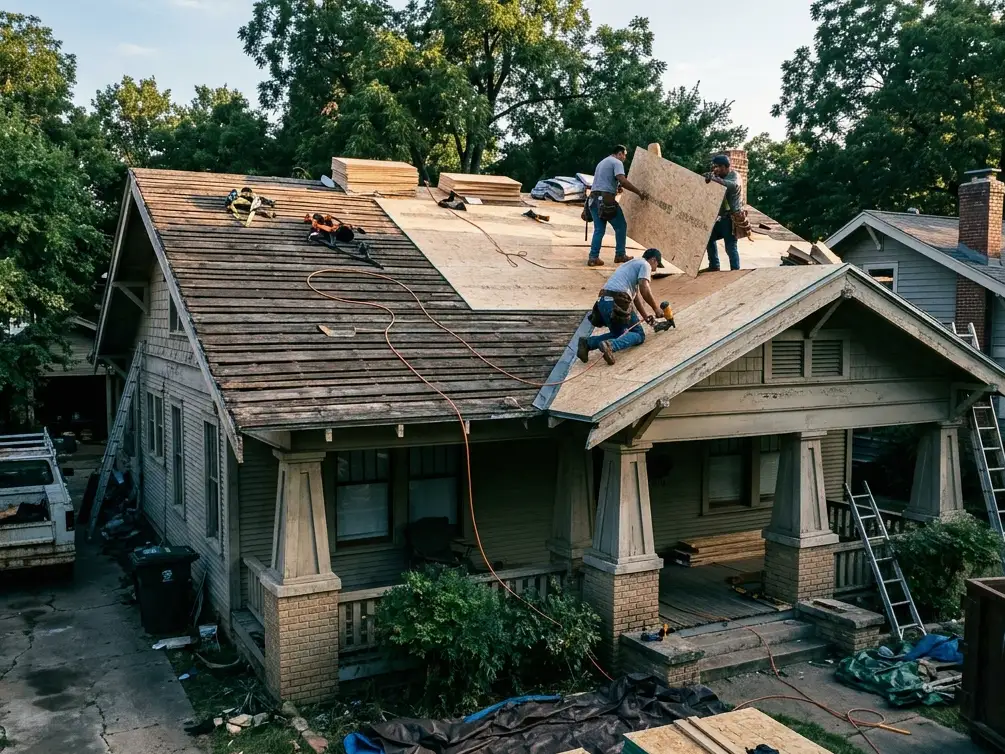
Bungalow roofs here hide two common issues. Many still sit on spaced 1x boards laid for wood shingles, which have to be sheathed solid before modern shingles can be nailed properly. Half-story attics also tend to be finished rooms with little space for air to move, so heat and moisture build under the deck. On Junius Heights reroofs we sheathe the deck, find a venting path that leaves the street view unchanged and handle the district's preservation review before ordering materials.
Junius Heights is one of the Dallas neighborhoods our crews reach straight from the McKinney Avenue office. See the full Dallas roofing page for citywide permit and storm notes.
Homes and roofs in Junius Heights
Craftsman bungalows dominate, mixed with Tudor cottages and a few Prairie houses. Front gables run low and wide, with exposed rafter tails and knee-braced eaves, and many homes have shed dormers lighting a finished upstairs. Original decking is often spaced board. Lots are narrow with rear alleys, and many carry a detached garage with its own small roof that wears out on a different schedule from the house.
Storm exposure in Junius Heights
Junius Heights gets the standard North Texas mix: hail most often from March through June, heavy spring downpours and summer thunderstorms with sudden wind. Low bungalow gables shed water slowly in long rains, so wind-driven water finds every weak dormer joint. The neighborhood's old pecans and elms add limb risk whenever a strong line crosses East Dallas.
Roofing jobs we do most in Junius Heights
- Solid re-decking: sheathing over spaced 1x boards so new shingles have full nailing support.
- Dormer repairs: resealing shed dormer cheeks and the low joint where the dormer roof meets the main slope.
- Half-story attic venting: opening intake and exhaust paths for finished upstairs rooms without new vents on the front.
- Detached garage reroofs: replacing the small rear garage roof alongside the house so both match.
- Chimney flashing: new step and counterflashing on brick chimneys that pass through low bungalow gables.
Good to know before we start
- Historic district review: visible roofing changes generally need city preservation approval, which we prepare and schedule.
- Spaced decking: plan on sheathing for most original roofs here; we show you the boards once the old shingles are off.
- Narrow lots: houses sit close together, so we protect the neighbor's side with tarps and work debris back toward the alley.
Around the area
- Lakewood Theater
- Gaston Avenue
- Abrams Road
- Junius Street
Junius Heights roofing questions
Why are there gaps between the boards under my Junius Heights roof?
Those spaced boards were laid for the wood shingles these bungalows first wore, letting the wood dry from below. Modern asphalt shingles need a solid deck, so we sheathe over the boards with plywood during the reroof. On a typical Junius Heights bungalow that adds about $1,650 to $3,900, based on roof size and how many boards need repair first.
Can my Junius Heights attic be vented without changing the look from the street?
In nearly every case. We favor low-profile ridge vent, intake at the soffits or under the eaves and rear-facing exhaust where needed, so nothing new shows on the front gable. In finished half-story attics we add baffles along the rafters to keep an air path open. The venting plan goes into the preservation paperwork so it is reviewed with the rest of the roof.
Does a like-for-like reroof in Junius Heights still need preservation review?
Plan on checking every time. Visible exterior work in a Dallas historic district generally needs city approval, and smaller like-for-like changes can often move faster than major ones. We confirm with the preservation office before the job, send the shingle and color details and start once approval is in hand, along with the regular Dallas reroof permit.