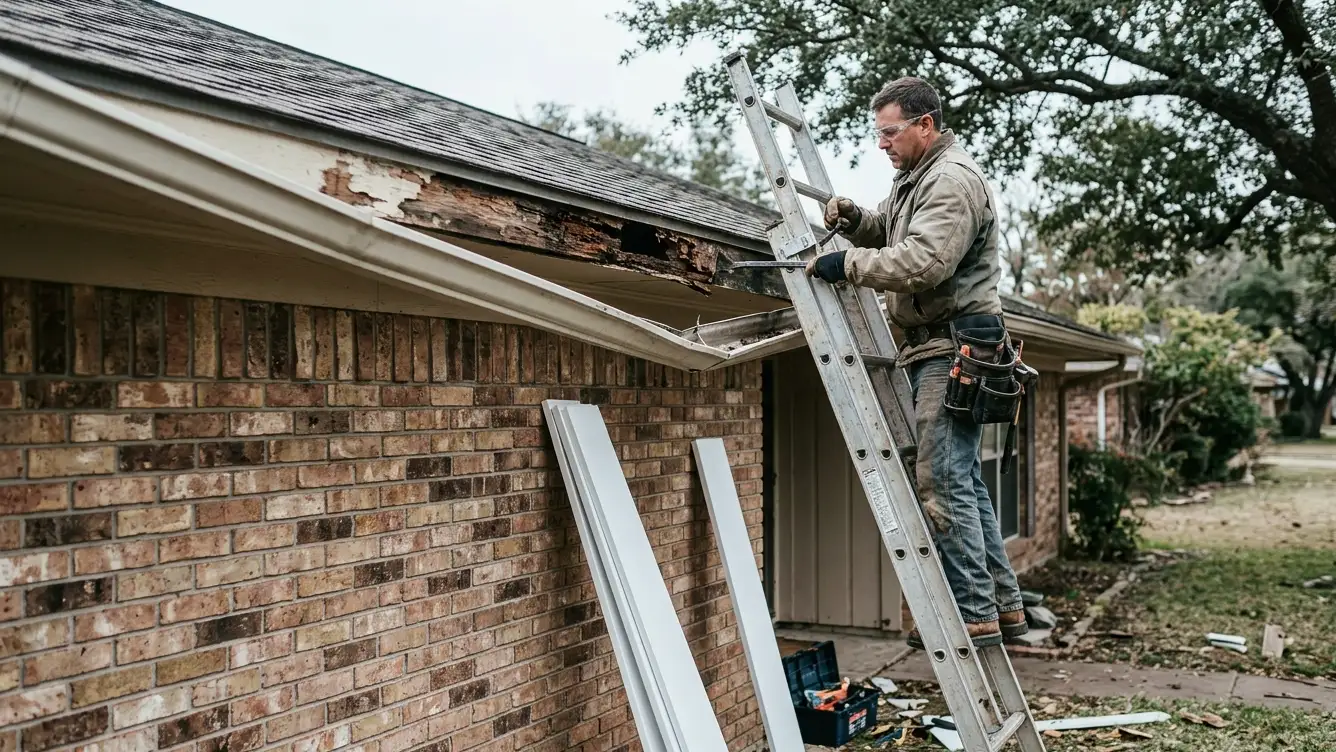
Fascia and soffit repair replaces rotted or damaged trim boards along the roof edge and the underside of the eaves, plus any vent panels and nearby rafter tails. You need it when wood is soft, paint keeps peeling, gutters are pulling away or animals are getting in. Dallas fascia and soffit repairs commonly run $415 to $2,640.
The fascia is the trim board along the roof edge that the gutters hang on. The soffit is the underside of the overhang, usually vented to let air into the attic. Both sit right where roof runoff, gutter overflow and summer heat meet, and wood versions take a lot of abuse. Paint peels, water wicks into the end grain, and rot spreads quietly behind the gutter where no one looks.
Our crews repair fascia and soffit as part of the roof system, not just as trim carpentry. We remove the gutter where needed, cut out rot back to sound wood, check the rafter tails and the roof decking at the eave, then install new boards, drip edge and venting. When we put the gutters back, they hang on solid wood again and the water is directed off the roof edge correctly.
Signs your fascia or soffit needs repair
- Soft or crumbling wood: a screwdriver sinks into the fascia board near a gutter corner or downspout.
- Gutters tilting away: gutter spikes or hangers pulling loose because the wood behind them can no longer hold.
- Peeling paint that keeps coming back: repainting every year or two in the same spot means moisture is getting into the wood.
- Holes or chewed edges: squirrels, rats and birds open gaps at soffit corners and roof returns to reach the attic.
- Sagging soffit panels: soffit that droops between supports, often because the nailer behind it has rotted.
- Water stains on the soffit: dark streaks underneath the overhang usually trace to missing drip edge or gutter overflow.
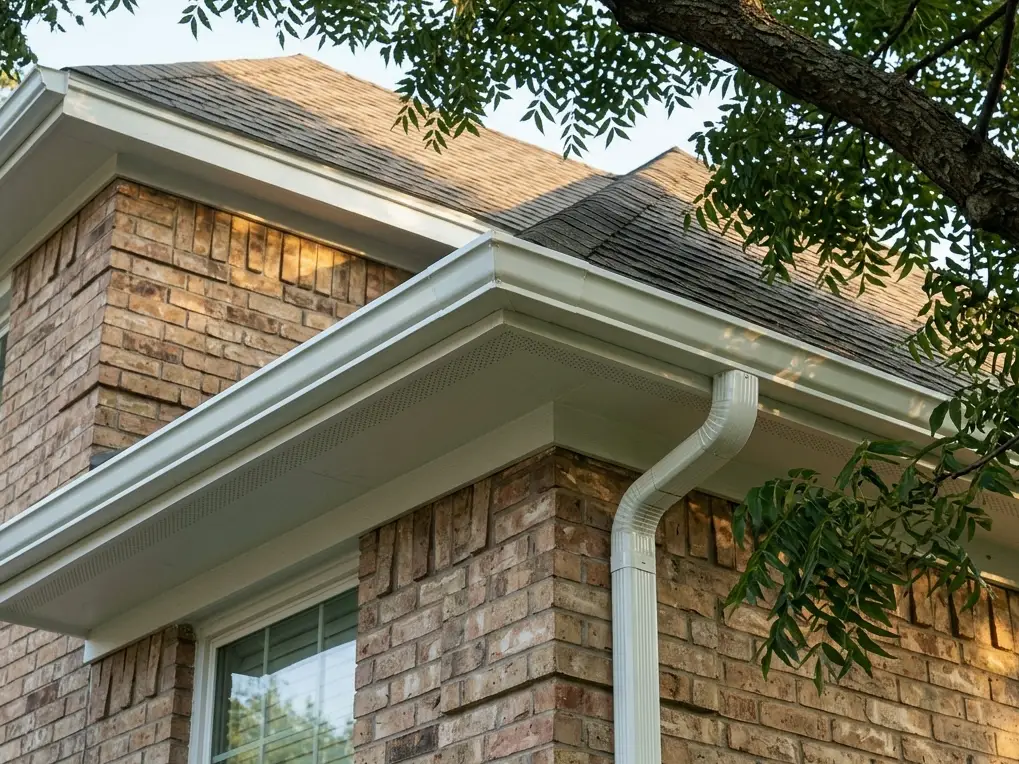
What a fascia and soffit repair includes
- We take down the gutter section over the damaged area so the fascia can be cut back and replaced in full lengths.
- Rotted fascia and sub-fascia are removed to sound wood, and rafter tails behind them are probed and sistered if they are soft.
- New fascia is installed in primed wood, PVC or fiber cement with joints scarfed and sealed so water does not wick in.
- Soffit panels are replaced with vented or solid material to match the house, and any animal entry points are closed.
- Drip edge is added at the eave if it was missing, so runoff drops into the gutter rather than soaking the new fascia.
- Gutters are rehung on new hangers screwed into solid wood and pitched toward the downspouts.
Why Dallas eaves rot and attract critters
In Dallas, fascia rot usually starts at the corners and downspout outlets, where gutters overflow during heavy storms and the boards stay damp for days afterward. Many older homes in established neighborhoods have original painted wood fascia with no drip edge, so runoff from the shingles hits the board directly. Combine that with a big pecan or live oak dropping leaves into the gutters, and the overflow happens every storm.
Squirrels and roof rats are a real issue in tree-lined parts of Dallas. They chew through soft fascia at roof returns and push past loose soffit panels to nest in warm attic insulation. Once inside, they chew wiring and tear up ductwork. Rebuilding the eave with solid material and closing every gap matters as much as replacing the rotted board. If animals are already living in the attic, have them removed before we seal the openings.
Fascia and soffit materials compared
The material you choose affects how long the repair lasts and how much upkeep it needs. In North Texas heat and storm runoff, some materials hold paint and shape better than others. These are the options we install on Dallas homes and how they compare.
| Option | Best for | What to know |
|---|---|---|
| Primed pine or fir | Historic homes and matching existing trim | Lowest material cost; needs paint on all sides and regular repainting |
| PVC trim board | Fascia behind gutters and corners prone to overflow | Does not rot; expands with heat, so joints need room to move |
| Fiber cement trim | Homes with fiber cement siding | Holds paint well and resists rot; heavier to cut and install |
| Aluminum fascia wrap | Covering sound wood to cut maintenance | Only works over solid wood; wrapping over rot hides a growing problem |
| Vented vinyl or aluminum soffit | Overhangs that need attic intake airflow | Pairs with ridge vents to move hot air out of the attic |
What fascia & soffit repair costs in Dallas
| Fascia replacement, per 10 feet | $165 to $345 |
| Soffit replacement, per 10 feet | $145 to $315 |
| Rafter tail sistering, each | $85 to $175 |
| Gutter removal and rehang, per run | $125 to $265 |
| Paint on new trim, per 10 feet | $45 to $95 |
The total depends on how many linear feet are damaged, whether rafter tails need sistering and what material you choose. A single rotted corner on a one-story ranch is low; long runs on a two-story house with painted trim and new vented soffit sit higher. Gutter removal and rehanging over the repaired area are included in our pricing so nothing is a surprise.
How the job runs
Call
Tell us what you see. Describe the stain, the noise in the wind or the shingles in the yard. If water is coming in, we talk you through what to move and when a crew can be there.
Look
We find the entry point. A crew walks the roof and checks the attic side, because the wet spot on a ceiling is often several feet downslope of the real failure.
Price
Written scope, fixed number. You get the repair in writing, with what we will replace, the materials and the price, before anyone pulls a shingle.
Fix
Repair matched to the roof. We seal, flash, replace or rebuild the damaged section with materials that match what is already up there as closely as the market allows.
Check
Water test and cleanup. Where it makes sense we hose-test the area, then magnet-sweep the yard for nails and photograph the finished work for your records.
Fascia & Soffit Repair questions
Can you just cover rotted fascia with aluminum?
We do not wrap over rot. Aluminum fascia wrap can protect sound wood and cut down on painting, but if rot is already present, covering it traps moisture and lets the decay keep spreading into the rafter tails and roof decking. We replace the soft wood first, then wrap or paint the new board.
How do I know if animals are getting in through my soffit?
Look for chewed edges at roof corners, gaps where soffit panels meet the fascia, droppings on the ground below or noise in the attic at dawn and dusk. In the attic, you might see trampled insulation or nests near the eaves. We close entry points during the repair once any animals have been removed.
Why does my fascia rot behind the gutter?
Water gets behind the gutter when there is no drip edge or when the gutter is clogged and overflows toward the house. The back of the gutter holds that water against the board, and wood stays wet long enough to rot. Adding drip edge and keeping gutters clear and pitched properly prevents the problem from coming back.
Does soffit venting affect my attic temperature?
Yes. Vented soffit lets cooler air in low on the roof while ridge or roof vents release hot air at the top. When soffit intake is blocked by paint, insulation or solid panels, the attic runs hotter, shingles bake faster and the AC works harder. We can open intake airflow as part of the soffit repair.