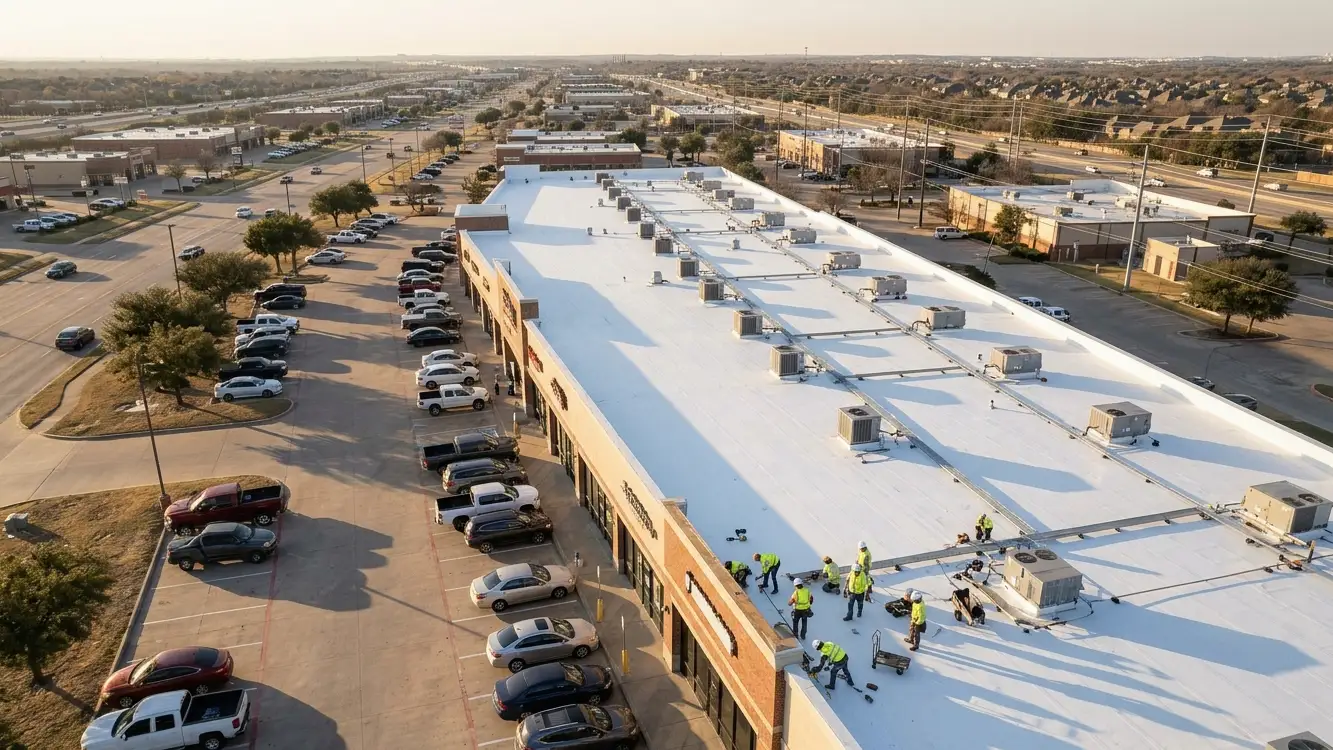
Commercial roofing covers repairs, coatings and replacement of low-slope systems like TPO, modified bitumen and EPDM, plus steep-slope roofs on commercial buildings. You need it when leaks recur, insulation is wet, or the membrane has reached the end of its life. Dallas commercial replacements typically run about $6.85 to $13.40 per square foot, depending on system and tear-off.
Commercial roofs in Dallas work in harder conditions than most people imagine. A low-slope roof over a retail strip or a warehouse takes direct sun all day, hail every spring, and runoff from a large area that has to find a handful of drains. When one of those pieces fails, the leak usually appears somewhere other than where the water entered, often over a tenant's inventory or a congregation's sanctuary, and the cost climbs fast.
We work with property owners, managers and facility teams on low-slope and steep-slope commercial buildings across the Dallas area: retail centers, office buildings, warehouses and flex space, churches, schools and apartment complexes. We start with a core cut to learn what is actually on the roof, then lay out repair, restoration and replacement options with realistic costs. Work is phased around tenants and operating hours so the building keeps running while the roof gets done.
Signs your commercial roof needs attention
- Repeat leaks after repairs: Patching the same area more than once usually means water is traveling through wet insulation.
- Ponding that lingers: Water still sitting more than two days after rain is stressing the membrane and the deck.
- Open seams and blistering: Laps lifting on TPO or EPDM, or blisters in mod bit, let water under the field.
- Shrinking or brittle membrane: Older EPDM pulling away from walls and curbs, or cracking at the edges, has run out of flexibility.
- Damaged rooftop equipment curbs: Flashing around HVAC units and exhaust fans that has split or pulled loose leaks into the space below.
- Hail fractures after a storm: Bruised or cracked membrane and dented metal mean it is time for an inspection and claim documentation.
What our commercial work covers
- We inspect the roof, take core cuts to find what system and insulation are there, and note wet areas through moisture readings.
- Owners and managers get a written scope with repair, restoration and replacement options priced side by side.
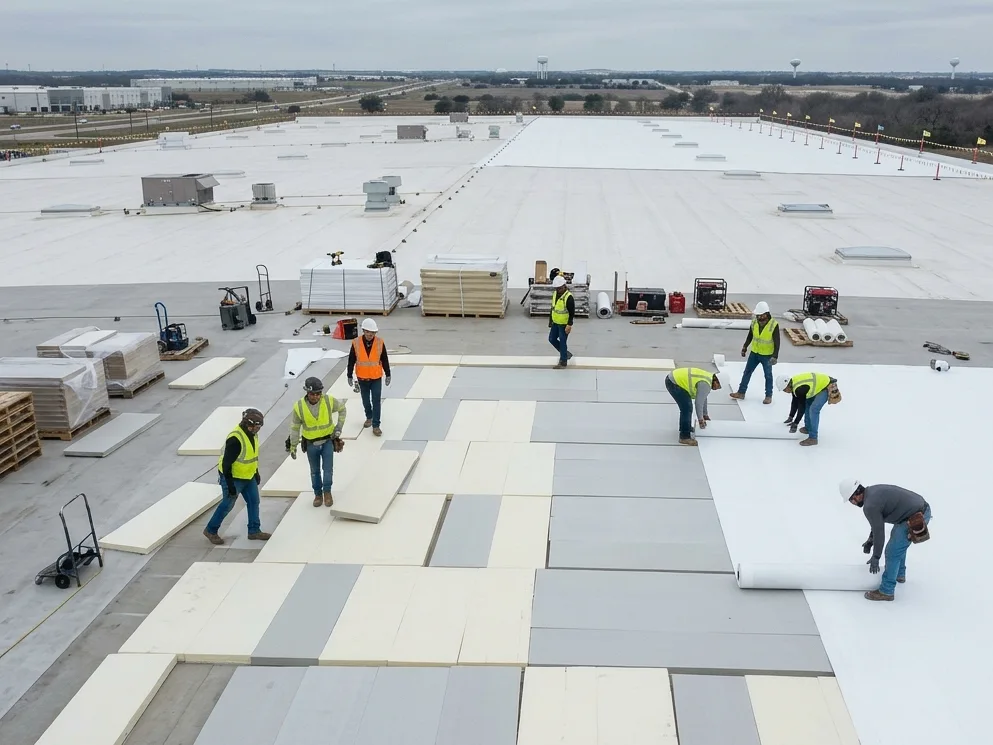
- Tear-off and replacement work is phased by section so tenants, worshippers or residents can stay in the building.
- New systems include insulation and, where needed, tapered layouts to move water toward drains and scuppers.
- Flashing at parapets, curbs, pipes and drains is rebuilt so the details hold up as well as the field membrane.
- We walk the finished roof with the owner or manager and leave photo records of the work for the building file.
Commercial roofs in the Dallas market
Dallas has an enormous supply of low-slope commercial roofs: strip centers along major corridors, tilt-wall warehouses in industrial areas near the airports and the I-20 and I-35E corridors, churches with large flat sections behind steep fronts, and garden-style apartment complexes with long low roofs. Most were built with TPO, modified bitumen or EPDM, and many are now on their second or third roof over the same deck. Recover options depend on how many layers are already up there.
Hail matters even more on commercial buildings because so much roof area is exposed at once and the rooftop units, skylights and metal edge take hits too. North Texas hail season runs roughly March through June, and a fractured membrane can let water soak into insulation for months before a leak shows. When a storm comes through, we document damage across the roof with photos and core samples so the building's insurer has a clear record to review.
Low-slope systems for commercial buildings
The right commercial roof depends on the building's use, its deck, the existing roof layers, and how long the owner plans to hold the property before selling or refinancing. These are the systems we install and maintain most on Dallas commercial buildings.
| System | Best for | What to know |
|---|---|---|
| TPO, 60 or 80 mil | Retail strips, offices, warehouses | White and reflective, hot-air welded seams; 80 mil adds thickness for hail and foot traffic |
| Modified bitumen, SBS or APP | Roofs with heavy traffic or many penetrations | Multi-ply and tough; granulated cap sheet resists punctures and handles flashing details well |
| EPDM rubber | Older buildings and large simple roofs | Flexible and long-lived; seams are taped or glued, and black EPDM runs hot unless coated |
| Silicone or acrylic restoration coating | Sound roofs with dry insulation | Extends the life of an aging roof without tear-off; only works over a dry, solid base |
| Standing seam metal | Churches, offices and steep sections | Long service life; works on steeper slopes and can be paired with low-slope areas |
What commercial roofing costs in Dallas
| Inspection with core cuts and moisture readings | $485 to $1,240 |
| Commercial leak repair visit | $565 to $2,370 |
| Restoration coating, per sq ft | $2.85 to $5.65 |
| Full tear-off and TPO replacement, per sq ft | $7.45 to $13.40 |
| Tapered ISO cricket and saddle work, per sq ft | $1.85 to $4.10 |
Tear-off depth, the number of existing layers, insulation thickness and tapering, and the membrane type drive most of the price. Parapet walls, rooftop equipment and drains add flashing labor. Buildings that must stay open need phased work, which changes crew scheduling and staging. Restoration coatings cost far less per square foot than replacement, but only when cores confirm the insulation is dry.
How the job runs
Call
Talk to us about the building. Tell us the building type, roof size, current membrane and whether there is an active leak, and we schedule a survey.
Survey
Core cuts and moisture. We walk the roof, check seams, drains and edges, take core samples where needed and map wet insulation.
Propose
Options with numbers. Repair, coating, recover or full replacement are priced side by side so owners and managers can plan the budget.
Schedule
Work around tenants. We plan staging, noise and access around business hours, and pull any permit the city requires.
Install
Membrane and details. Crews install insulation, membrane and flashing details, then water-test drains and transitions.
Close
Turnover package. You receive photos, material data and maintenance notes for the building file.
Commercial Roofing questions
Can our tenants stay open while the roof is replaced?
In almost every case, yes. We split the roof into sections and only tear off what can be dried in the same day, so the building is never left open overnight. Noisy work and crane lifts are scheduled around business hours where possible, and we coordinate with property managers on tenant notices, parking, and protecting entrances and HVAC intakes from dust and odor.
How do you decide between repairs, a coating and a full replacement?
It comes down to what is under the membrane. We take core cuts and moisture readings across the roof. If the insulation is dry and the membrane is mostly sound, repairs or a restoration coating can add years. If large areas are wet, coating over them traps the water and replacement is the honest answer. You see the core data along with each option's cost.
How many roof layers can stay on a commercial building?
Building codes generally allow a recover over a single existing layer, provided the existing roof and insulation are dry and the deck is sound. With two layers already up there, a full tear-off is typically required. We verify the layer count with core cuts, because older Dallas buildings often have more history under the membrane than the owner's records show.
Do you handle roofs on churches and apartment complexes?
Yes. Churches often combine a steep shingled or metal front with large low-slope sections over the fellowship hall and classrooms, and we schedule around services and events. Apartment complexes usually mean many buildings with long low roofs and occupied units below, so we plan building by building, notify residents ahead of time, and keep walkways and parking areas clear.