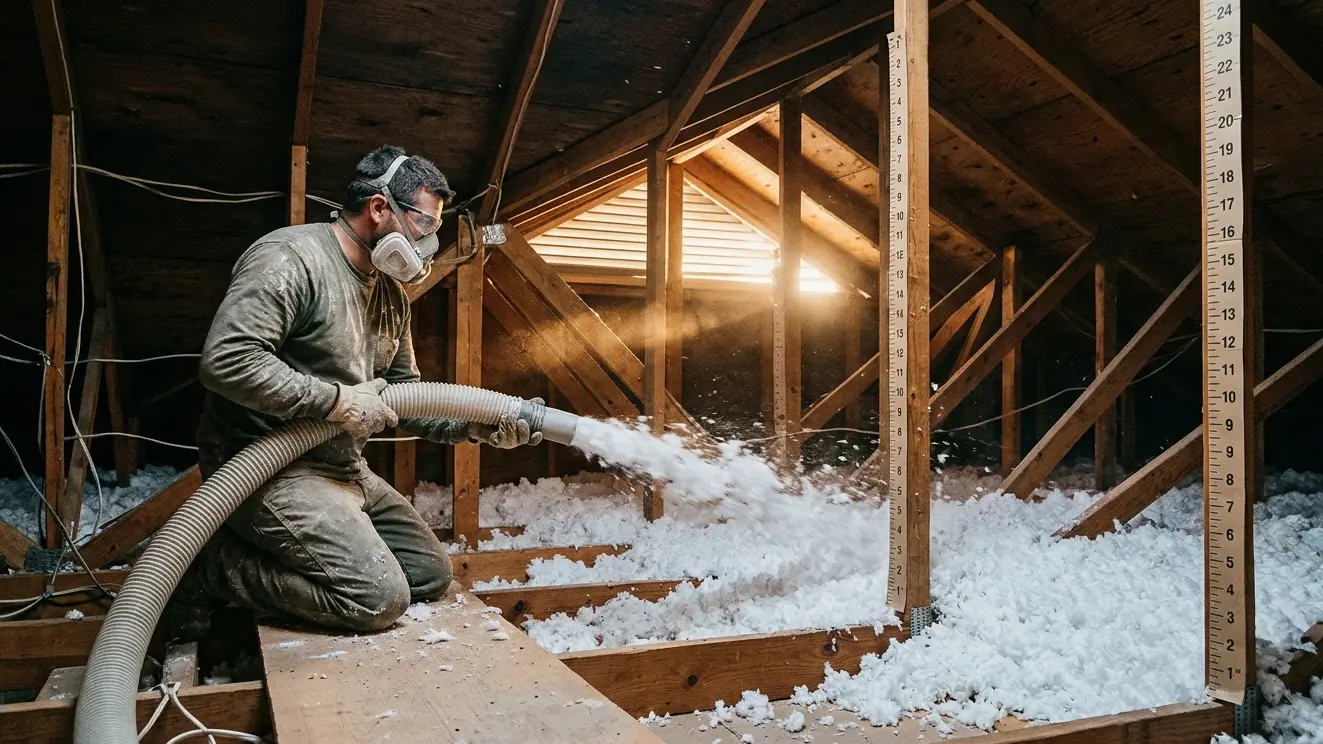
Attic insulation adds or replaces blown-in fiberglass, cellulose or batts above your ceiling to slow summer heat gain. Dallas homes need it when existing insulation is under ten inches, packed down, or soaked by a roof leak. Blowing in a top-up to R-38 on a typical attic here runs $1,385 to $3,240, with removal and air sealing extra.
Many older North Texas homes still have the insulation they were built with: a few inches of batts or loose fill that has settled to R-11 or R-19. Dallas sits in climate zone 3, and current energy code guidance for attics in this zone generally calls for around R-38 or higher, which works out to roughly eleven to fourteen inches of blown-in fiberglass or ten to eleven inches of cellulose, depending on the product. Topping up a thin attic is one of the simplest ways to cut cooling costs.
We work on insulation as roofers because we are already in the attic. After a leak, wet insulation has to come out, or it holds moisture against drywall and framing. During ventilation work, insulation needs to be pulled away from soffits and baffles set. Before blowing new material, we air seal: foam around plumbing and electrical penetrations, the attic hatch, and the top plates of walls. Air sealing first makes the new insulation perform closer to its rated R-value.
Signs your attic needs more insulation
- You can see the ceiling joists: The tops of the joists show above the insulation, meaning it is well below code depth.
- Hot upstairs ceilings: The drywall feels warm to the touch on summer afternoons.
- Uneven or bare spots: Insulation has been pushed aside by cable, HVAC or pest work and never replaced.
- Water-stained or matted areas: A roof leak soaked a section and it has dried flat and moldy.
- Rodent activity: Tunnels, droppings or nests in the insulation mean it needs removal and replacement.
- High summer power bills: Cooling costs keep climbing even though the AC is well maintained.
What our attic insulation work includes
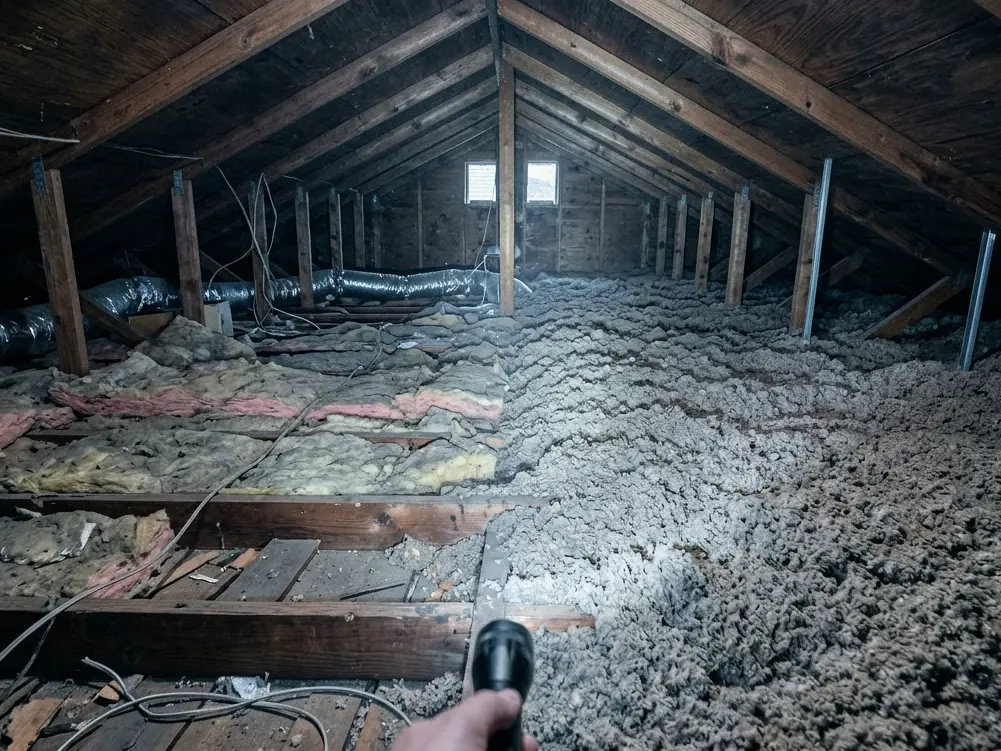
- We measure existing depth in several spots and photograph the attic so you see the starting point.
- Wet, moldy or rodent-damaged insulation is vacuumed out and bagged before any new material goes in.
- Plumbing stacks, wire holes, top plates and recessed lights are air sealed with foam or rated sealant.
- Baffles are set at the eaves and a dam is built around the attic hatch so insulation stays put.
- We blow fiberglass or cellulose to the target depth, using depth rulers stapled to joists as visual markers.
- You get photos of finished depth and a card stapled near the hatch listing material, depth and R-value.
Insulating for climate zone 3 and Texas attics
North Texas attics are some of the hottest in the country, often over 140°F on summer afternoons. Ductwork usually runs through that attic, so poor insulation hurts twice: heat comes through the ceiling, and the ducts lose cooling before air reaches the vents. Deep insulation over the ceiling, combined with sealed and wrapped ducts, makes a noticeable difference. Most Dallas homes we see from the 1970s through the 1990s need a top-up to reach R-38.
Storm leaks are a common reason we pull insulation. A hail-punctured roof or a wind-lifted shingle can leak for weeks before a stain shows on the ceiling, and by then insulation is matted and holding water. After a roof repair or replacement from storm damage, we check the attic and replace wet insulation, since soaked material loses most of its R-value and can grow mold against the ceiling drywall in the room below.
Insulation types we install
Each insulation type gets to the target R-value differently, at different depths and costs. In Dallas attics, blown-in loose fill is most common because it fills around joists, wiring and ductwork evenly. Here is how the main choices compare in a hot Texas attic.
| Type | Best for | What to know |
|---|---|---|
| Blown-in fiberglass | Most Dallas attics and top-ups over existing insulation | Light, will not settle much; needs more depth than cellulose for the same R. |
| Blown-in cellulose | Attics with many gaps and odd framing | Denser, fills gaps well; treated with borate for pest and fire resistance. |
| Fiberglass batts | Open walls, knee walls and floored attic areas | Must be cut and fit tightly; gaps cut performance. |
| Radiant barrier plus blown-in | Very hot attics with ducts overhead | Reflects heat at the roof while insulation slows conduction below. |
| Spray foam at roofline | Conditioned attics and HVAC-heavy attics | Higher cost; changes how the attic is vented and must be planned. |
What attic insulation costs in Dallas
| Blown-in fiberglass, per sq ft to R-38 | $1.15 to $1.85 |
| Blown-in cellulose, per sq ft to R-38 | $1.25 to $1.95 |
| Old insulation removal, per sq ft | $1.05 to $1.80 |
| Air sealing package, typical attic | $425 to $890 |
| Attic hatch dam and insulated cover | $165 to $295 |
Attic size, current depth and material type set most of the cost. Removing old insulation adds labor and disposal. Air sealing is extra but worth it in older homes with many ceiling penetrations. Tight attics with low pitch or limited access take longer, and cellulose usually costs a little more per square foot than fiberglass for the same R-value.
How the job runs
Call
Describe the symptom. Hot upstairs rooms, a damp attic smell, a drip around a skylight or a solar array that needs to come off: tell us what you are noticing.
Inspect
Roof and attic together. We look at intake and exhaust, decking condition, insulation depth and every penetration from both sides of the roof deck.
Price
Clear scope. You get a written scope that says what changes, why it helps in a Dallas summer and what it costs.
Install
Work done clean. Our crew protects the living space below, works from the roof side where possible and seals every opening it touches.
Verify
Check the result. We confirm airflow paths, flashing laps and fit, then photograph the finished work for your file.
Attic Insulation questions
What R-value should a Dallas attic have?
Dallas falls in climate zone 3. Current energy code guidance for that zone generally recommends around R-38 in attics, and some homeowners go to R-49 for extra savings. The depth that takes depends on the product, so check the coverage chart on the bag or ask us to show it.
Can new insulation go right over the old?
Usually yes, if the old insulation is dry and free of mold or rodent damage. Blowing new material on top raises total R-value without removal costs. If any area is wet, matted or contaminated, we remove that section first. Vermiculite needs testing before anyone disturbs it.
Is cellulose or fiberglass better in Texas attics?
Both work well when installed to the right depth. Cellulose is denser and fills gaps around wiring and framing, and its borate treatment helps against pests. Fiberglass is lighter, settles less, and does not absorb water. For most Dallas attics, cost and access decide the choice more than performance.
Will adding insulation make my attic hotter and hurt my shingles?
No. Insulation sits on the ceiling and slows heat moving down into the house; it does not add heat to the attic. What does affect shingle temperature is ventilation. If insulation blocks soffit vents, though, airflow drops, which is why we install baffles at the eaves first.