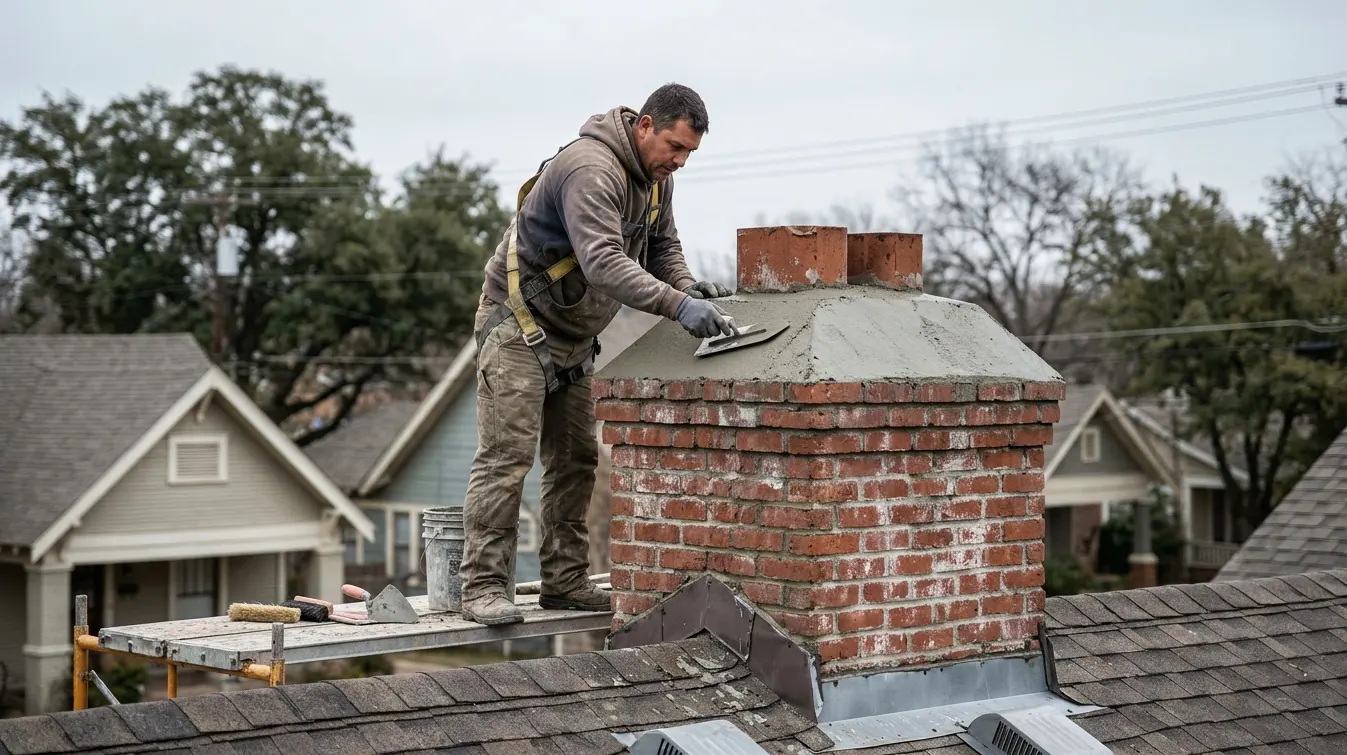
Chimney cap and crown repair fixes the top of the chimney so it sheds water: rebuilding cracked mortar crowns, replacing rusted chase covers, installing flue caps and resetting counterflashing. You need it when water shows near the fireplace or the chimney top is cracked or rusted. Dallas cap and crown work usually runs $365 to $2,480.
The top of a chimney takes more direct weather than almost any other part of the house. On a brick or stone chimney, the crown is the concrete or mortar slab that covers the top of the masonry around the flue. On a framed chimney with siding, the top is a sheet-metal chase cover. Either one has a single job: shed water away from the inside of the chimney. When it cracks or rusts through, rain runs straight down into the structure.
Our crews repair chimney tops as part of keeping the roof dry. We rebuild cracked crowns with a proper overhang and drip edge, replace rusted chase covers with heavier gauge metal, install caps with spark screen to keep out rain and animals and reset the counterflashing where the chimney meets the roof. Every chimney top we finish gets photos from all four sides, so you can see the work without climbing a ladder.
Signs your chimney top is letting water in
- Cracks across the crown: hairline or wide cracks in the concrete slab at the top let water into the masonry with every rain.
- Rust on the chase cover: orange staining on a metal top or down the siding below it means the metal is corroding through.
- Water in the firebox: damp ash, rust on the damper or water pooling inside the fireplace after storms.
- Missing flue cap: an open flue lets rain, leaves and animals straight into the chimney.
- Spalling brick: faces of bricks flaking or popping off near the top, caused by trapped water cycling through heat and cold.
- Stained ceiling by the chimney: discolored drywall beside the chimney chase or above the mantel.
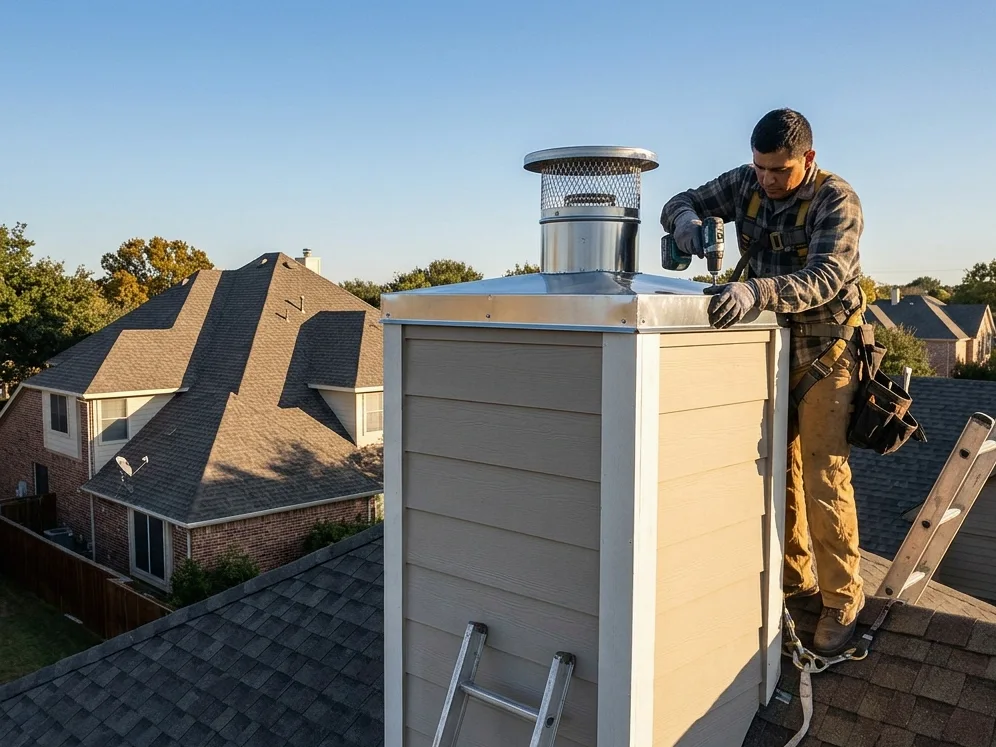
Chimney top work our crews handle
- We inspect the crown, cap, chase cover and roof flashing up close, with photos so you can see exactly what we found.
- Small crown cracks are sealed with a flexible crown repair coating designed for masonry, applied over clean, dry concrete.
- Badly cracked crowns are removed and rebuilt with a sloped, formed concrete crown that overhangs the brick and has a drip edge.
- Rusted chase covers on framed chimneys are replaced with new heavier-gauge or stainless covers that are crowned to shed water.
- Flue caps with spark screen are installed or replaced to keep rain, debris, birds and squirrels out.
- Counterflashing and the cricket behind wide chimneys are rebuilt where the chimney meets the roof.
What Dallas weather does to chimney tops
Dallas chimneys go through fast temperature swings. A sunny afternoon can heat a chimney crown well above the air temperature, and a cold front or a summer storm can drop it quickly. Concrete crowns that were poured too thin or mixed from basic mortar crack under that cycling. In the winters when North Texas gets a hard freeze, water that has seeped into those cracks expands and makes them wider.
Many suburban homes around Dallas have framed chimney chases covered with siding and topped with thin galvanized chase covers. Those flat covers collect water, rust from the center and eventually leak straight down the chase. Older brick homes in neighborhoods with mature trees also see chimney caps clogged with leaves and nests. A crowned, heavier cover and a good cap stop most of what we see, and they cost far less than rebuilding a rotted chase.
Chimney top repair options
The right fix depends on what the top of the chimney is made of and how far the damage has gone. This is how we match the repair to the problem on Dallas chimneys, from a sealing job to a full rebuild.
| Option | Best for | What to know |
|---|---|---|
| Crown crack sealing | Fine cracks on an otherwise solid crown | Elastomeric coating buys several years if the crown was built with a slope |
| Crown rebuild | Wide cracks, crumbling mortar or flat crowns that pond water | Formed concrete with an overhang and drip edge, cured before the cap goes on |
| Chase cover replacement | Framed chimneys with siding and a rusted metal top | A crowned cover sheds water; flat covers puddle and rust from the middle |
| Flue cap install | Open flues or caps that are bent or rusted | Spark screen keeps out animals and embers; sized to the flue tile |
What chimney cap & crown repair costs in Dallas
| Flue cap with spark screen | $185 to $465 |
| Crown crack sealing | $365 to $785 |
| Crown rebuild | $925 to $2,480 |
| Chase cover replacement | $545 to $1,385 |
| Counterflashing reset at chimney | $465 to $1,140 |
Cost depends on chimney height above the roof, roof pitch, the number of flues and whether the crown is being sealed or rebuilt. A single-flue cap on a one-story ranch is low. A multi-flue brick crown rebuild on a steep two-story roof, with new counterflashing, sits higher. Stainless steel covers and caps cost more than galvanized but resist rust far longer.
How the job runs
Call
Tell us what you see. Describe the stain, the noise in the wind or the shingles in the yard. If water is coming in, we talk you through what to move and when a crew can be there.
Look
We find the entry point. A crew walks the roof and checks the attic side, because the wet spot on a ceiling is often several feet downslope of the real failure.
Price
Written scope, fixed number. You get the repair in writing, with what we will replace, the materials and the price, before anyone pulls a shingle.
Fix
Repair matched to the roof. We seal, flash, replace or rebuild the damaged section with materials that match what is already up there as closely as the market allows.
Check
Water test and cleanup. Where it makes sense we hose-test the area, then magnet-sweep the yard for nails and photograph the finished work for your records.
Chimney Cap & Crown Repair questions
What is the difference between a chimney cap and a crown?
The crown is the slab of concrete or mortar on top of the brick that covers everything except the flue opening. The cap is a metal hood with screen that sits over the flue itself. The crown protects the masonry, the cap keeps rain, animals and debris out of the flue. Most chimneys need both.
Can I seal my crown myself with caulk?
Caulk is not made for horizontal masonry surfaces in sun. It hardens, peels and lets water in again within a season or two. Crown sealers designed for chimneys flex with temperature changes and bond to concrete. They only work on crowns that are solid and sloped, so we check for that before recommending a seal.
Why is there water in my fireplace when it rains?
The usual causes are a missing or damaged flue cap, cracks in the crown, a rusted chase cover or failed counterflashing where the chimney meets the roof. Less often, water soaks through porous brick. We check the top of the chimney and the flashing first, since those cause most of the leaks we trace.
Does a wide chimney need a cricket?
On chimneys wider than about 30 inches, a cricket, which is a small peaked section of roof built on the uphill side, is commonly recommended because it diverts water and debris around the chimney instead of letting them pile up. Many older Dallas chimneys never got one, and that uphill side is where leaks start.