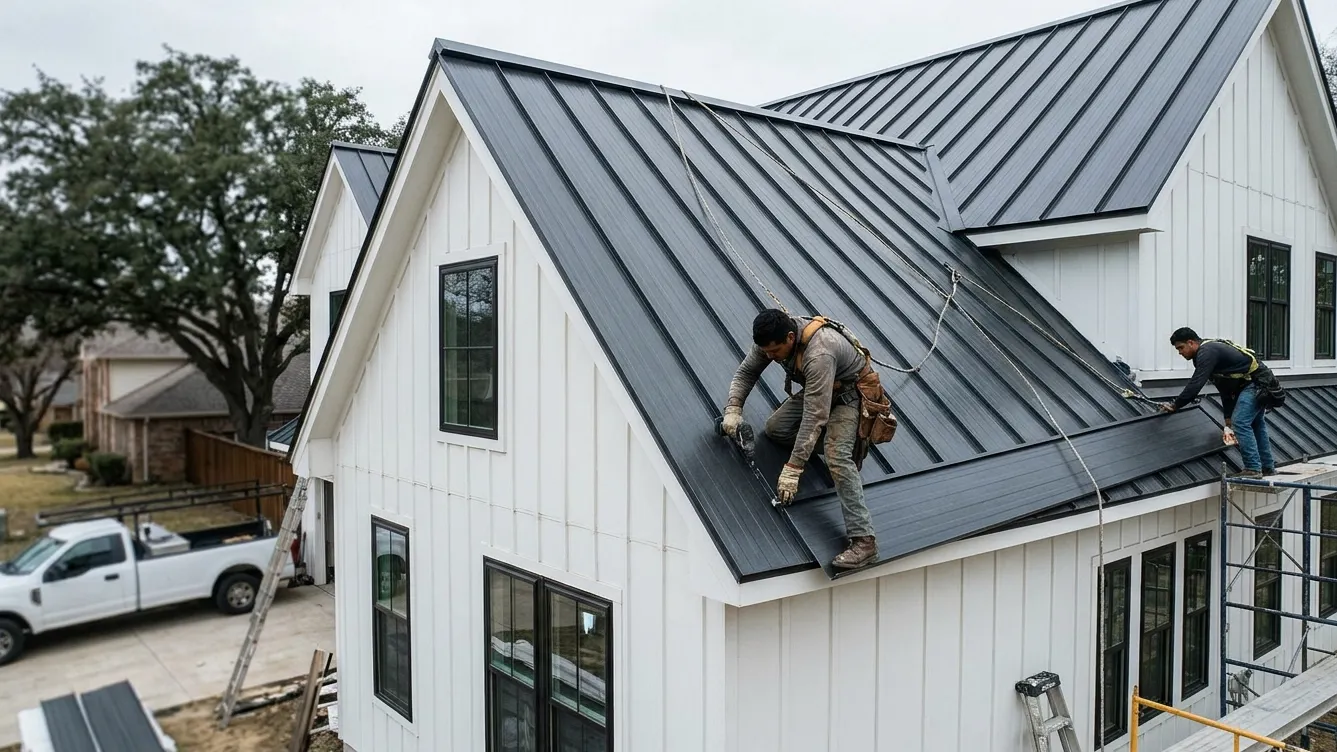
Metal roofing uses steel or aluminum panels, either concealed-fastener standing seam or exposed-fastener screw-down panels, to create a long-lasting roof that sheds heat and handles wind well. It suits Dallas homeowners who want a roof that lasts much longer than asphalt. Installed standing seam in Dallas typically runs $11.40 to $17.85 per square foot.
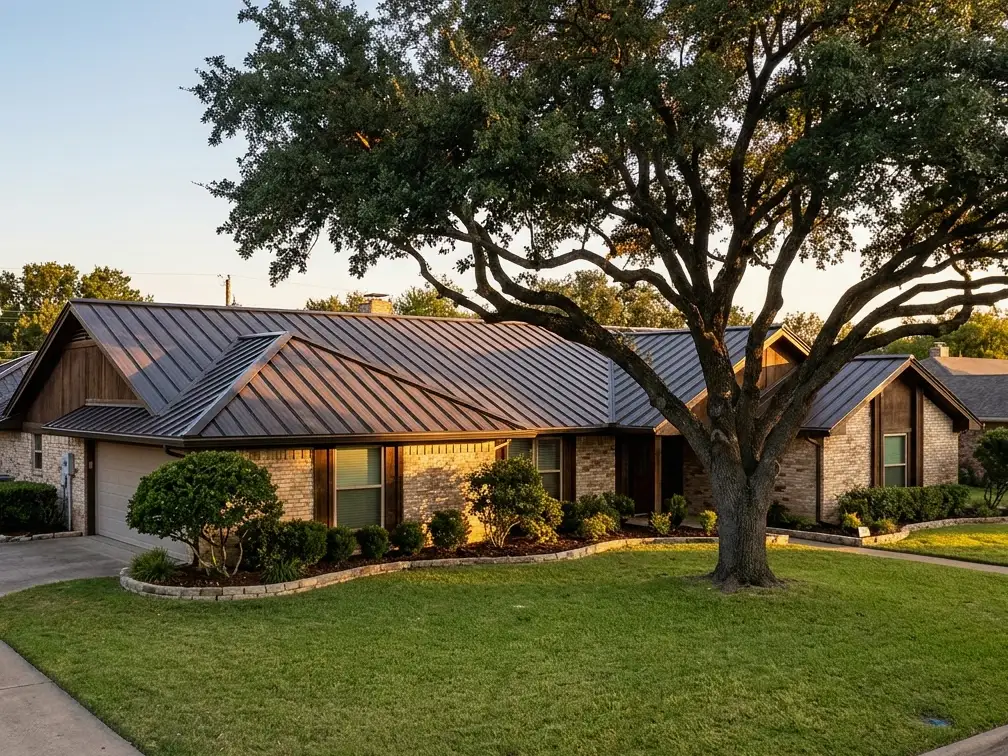
Metal roofs have become far more common around Dallas, on modern farmhouse builds, on ranch homes going for a cleaner look and on homeowners who are tired of reroofing after every big storm. The most popular choice is standing seam: long vertical panels with raised seams that lock together and hide the fasteners. Exposed-fastener panels, often called screw-down or R-panel, cost less and work well on outbuildings and some homes.
Our crews install metal roofs as complete systems: high-temperature synthetic underlayment, closures at the eaves and ridge, trim at every edge, flashing at walls and penetrations and panels fastened in the pattern the manufacturer specifies. Standing seam panels need room to expand and contract, so clips and slotted fastening allow that movement. Done right, a metal roof stays tight and quiet through decades of heat and cold, with no seams working loose.
Signs a metal roof could be the right fit
- You plan to stay long term: metal's higher upfront cost pays back best over many years in the same home.
- Frequent shingle storm damage: repeated wind blow-offs or granule loss after hail have you looking for something tougher.
- High cooling bills: reflective metal finishes help reduce heat gain into the attic on hot days.
- Low-slope sections: standing seam handles lower pitches than shingles, on porches and modern rooflines.
- Design goals: modern farmhouse, contemporary or ranch styles where metal fits the look.
- Solar plans: standing seam allows clamp-on solar mounting without drilling through the roof surface.
How our crews install a metal roof
- We tear off the existing roof, replace damaged decking and install high-temperature synthetic underlayment rated for metal.
- Eave trim, rake trim and closures are set first so panels sit straight and the edges are sealed against wind and insects.
- Standing seam panels are measured and formed to length, then fastened with clips that let each panel expand and contract.
- Exposed-fastener panels are screwed in the flat or the rib per manufacturer patterns, using screws with sealing washers.
- Flashing at walls, chimneys and penetrations is custom bent from matching metal and sealed with butyl tape and compatible sealant.
- Ridge caps with vented closures finish the roof, and we check every seam and fastener line before we leave.
Metal roofing in the Dallas climate
Metal handles North Texas heat differently from asphalt. A light or reflective metal finish bounces back more sunlight than dark shingles, which can lower the heat load on the attic during long summers. Metal also expands and contracts with temperature, and Dallas can swing many degrees in a day when a front blows through. That is why standing seam systems use clips and slotted fastening, and why fastener patterns on screw-down panels matter.
Hail is the question most Dallas homeowners ask about metal. Thicker panels resist denting better, which is one reason we often recommend 24 gauge over 26 gauge on homes in hail-prone suburbs. Large hail can still leave cosmetic dents on metal, but those dents usually do not cause leaks the way bruised shingles do. Many HOAs now approve metal roofs, though some limit colors or panel styles, so review comes first.
Metal roof options for Dallas homes
Metal roofing covers a range of panel styles, thicknesses and finishes. Each one fits different budgets, roof shapes and goals. These are the metal systems we install most on Dallas homes and how they compare in cost, appearance and performance.
| Option | Best for | What to know |
|---|---|---|
| 24 gauge standing seam | Homes in hail-prone areas and long-term owners | Thicker panels resist dents better and span more evenly |
| 26 gauge standing seam | Budget-conscious standing seam projects | Lighter and less expensive; more prone to oil canning and dents |
| Exposed-fastener R-panel | Barns, shops, patios and some homes | Lower cost; screws and washers need periodic inspection and replacement |
| Stone-coated steel | A shingle or tile look with metal benefits | Textured granules hide minor dents and look like traditional roofing |
| Aluminum standing seam | Homes near water or wanting lighter weight | Does not rust; costs more than steel and dents more easily |
What metal roofing costs in Dallas
| 24 gauge standing seam installed, per square | $1,240 to $1,785 |
| 26 gauge standing seam installed, per square | $1,140 to $1,560 |
| Exposed-fastener panel installed, per square | $765 to $1,090 |
| High-temperature underlayment, per square | $48 to $92 |
| Custom bent trim and flashing, per 10 feet | $95 to $215 |
Gauge, panel width, finish and roof complexity drive the price. Simple gable roofs cost less per square foot than roofs with many valleys, hips and dormers. Exposed-fastener panels run lower, around $7.65 to $10.90 per square foot. Premium finishes, custom trim colors and snow-style clips for solar add cost. Manufacturer paint and panel warranty terms depend on the product line and installer registration.
How the job runs
Call
Start with the house. We ask about the roof's age, the material you have, the material you want and any HOA rules, so the first visit is useful.
Measure
Inspection and measurements. We measure every plane, check decking from the attic, count penetrations and photograph the existing roof before we price anything.
Price
Line-item proposal. Tear-off, decking allowance, underlayment, flashing, ventilation and the roofing itself are listed separately, so you can compare honestly.
Permit
Permit and materials. Where the city requires a reroof permit we pull it in our name, and materials are delivered the day before the tear-off.
Build
Tear-off to ridge. Most homes are torn off, dried in and roofed in one or two working days, with the yard tarped and the gutters protected.
Close
Final walk and records. We walk the finished roof with you, sweep for nails, pass any required inspection and hand over photos and product details.
Metal Roofing questions
Is a metal roof noisy in Dallas rainstorms?
With solid decking and underlayment underneath, a metal roof on a house is usually no louder than shingles in heavy rain. The drumming people remember comes from metal fastened over open purlins on barns. Attic insulation further dampens sound. Hail is louder on metal, though most homeowners say it is not bothersome indoors.
What is oil canning on a metal roof?
Oil canning is a visible waviness in the flat part of metal panels, caused by stress in the metal, uneven decking or fastening that restricts movement. It is cosmetic, not a leak risk. Thicker gauges, striations or ribs in the panel and careful installation over a flat deck all reduce it.
Can solar panels go on a standing seam roof?
Yes, and standing seam is one of the best surfaces for solar. Clamps attach to the raised seams without drilling through the panels, so there are no roof penetrations for the mounts. If you plan solar later, tell us before installation so we can plan panel layout and seam spacing.
Does a metal roof need ventilation?
Yes. Even with a reflective finish, the attic still needs balanced intake and exhaust to move hot air out and limit moisture. We install vented ridge closures and confirm soffit intake is open. Good ventilation keeps attic temperatures down and protects the decking under the metal.