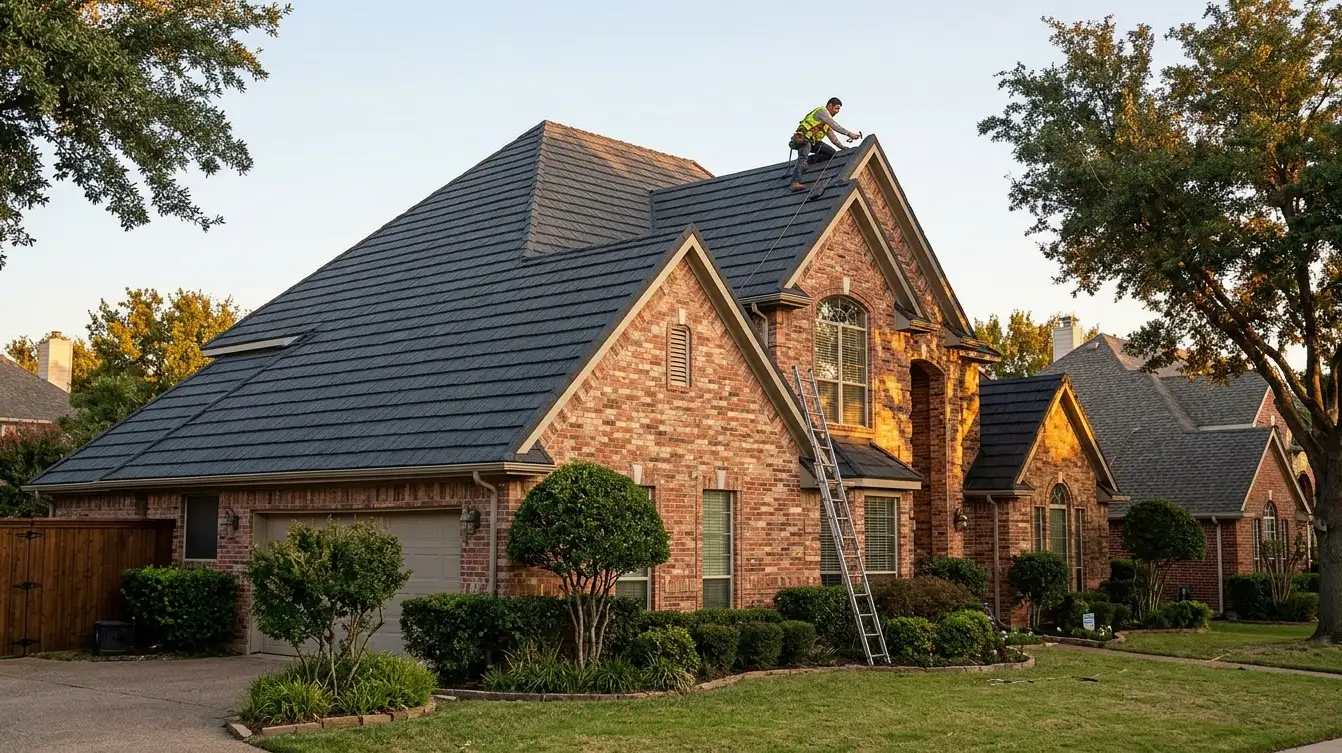
Stone-coated steel roofing is a stamped steel panel with a granule surface that copies shake, tile or shingle looks while carrying a Class 4 hail rating. Dallas homeowners choose it after repeated hail claims or when an HOA rejects standing seam. A full install on a typical DFW home usually runs $24,800 to $46,350, depending on profile and roof complexity.
Stone-coated steel panels start as Galvalume-coated steel, get an acrylic base coat, and then receive a layer of ceramic-coated stone granules fused on top. The result is a metal roof that does not look like a metal roof. Panels come stamped in profiles that copy shake, barrel tile, flat tile and dimensional shingle, so a Dallas home can keep its neighborhood look while trading out a material that hail chews through. Most product lines carry a UL 2218 Class 4 impact rating, which is the reason so much of our stone-coated work starts right after a claim.
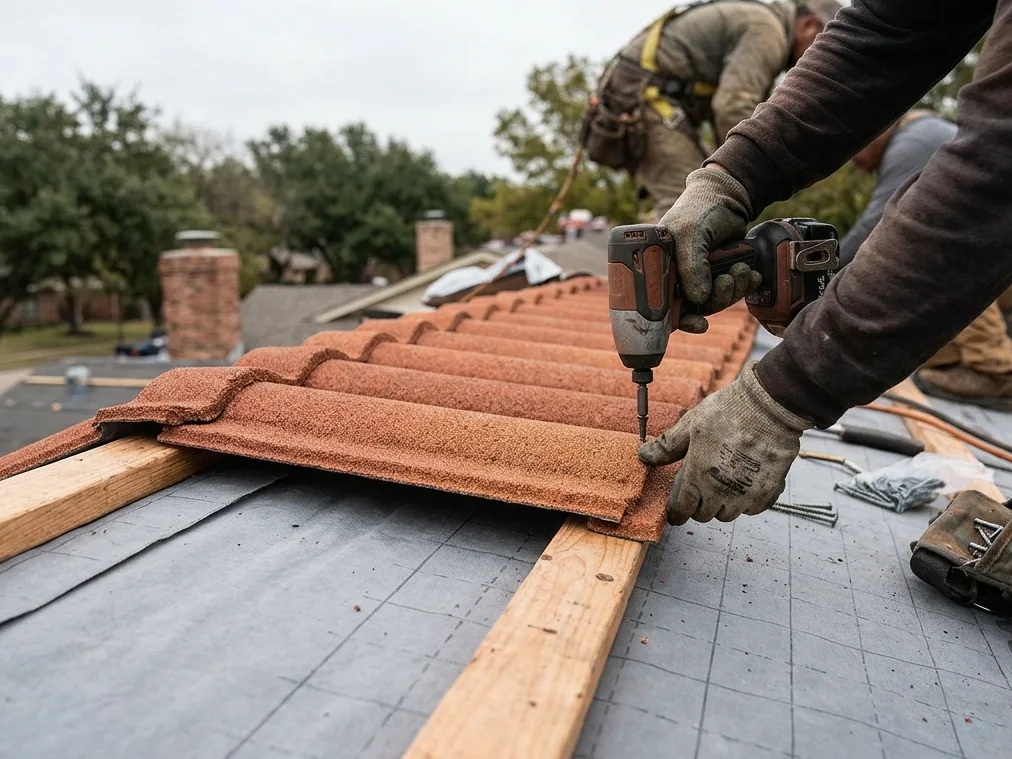
We install stone-coated steel two ways. On a batten system, treated wood or steel battens run across the deck and the panels hook onto them, leaving an air gap that helps with attic heat. On a direct-to-deck system, panels fasten straight through the underlayment, which keeps the roof lower at the eaves and simplifies tie-ins with an existing porch roof. Each method needs its own trim pieces at hips, rakes and valleys, and the trim is where cheap installs leak. Our crews cut and bend trim on site to fit your roof, not a catalog drawing.
When stone-coated steel makes sense for your house
- Repeat hail claims: Your shingle roof has been replaced or patched after two or more spring storms and the next deductible already feels close.
- HOA rejected metal: Your architectural committee turned down exposed standing seam but allows products that read as shake or tile from the curb.
- Heavy tile is out: You want a tile look on a frame that was never engineered to carry concrete or clay weight.
- Granule loss everywhere: Gutters fill with shingle grit after every rain and bare mat shows on the south and west slopes.
- Insurance discount questions: Your carrier has mentioned a premium credit for a UL 2218 Class 4 roof and you want to qualify.
- Long ownership plans: You intend to stay in the home long enough that a roof outlasting two shingle cycles pays off.
How our crews install a stone-coated steel roof
- We tear off to the deck, replace soft or delaminated sheathing, and re-fasten the deck to current nailing patterns.
- A high-temperature synthetic underlayment goes down first, with self-adhered membrane in every valley and at each wall tie-in.
- For batten installs we lay counter-battens or a cross-batten grid so any water that slips under a panel can drain to the eave.
- Panels are set from the eave up, overlapped and fastened on the side or face exactly as the manufacturer specifies for that profile.
- Hip, ridge and rake trim are cut on site and fitted with closure foam or a vented ridge so the attic can still breathe.
- Before we leave, we touch up any cut edge or scuffed spot with the manufacturer's matched coating and stone chips.
Why stone-coated steel holds up in North Texas hail
DFW sits in the middle of hail alley, and the peak run from roughly March through June brings storms that can strip a standard architectural shingle in one afternoon. Steel does not crack or bruise the way an asphalt mat does. A stone-coated panel can take a dent from very large hail, but the stone layer hides most cosmetic marks, and the panel keeps shedding water. Homeowners in Plano, Murphy and Wylie who lived through the April 2016 storms make up a big share of the people asking us about this product.
Heat is the other half of the story. Attics in Dallas often climb past 140°F in July and August, and a dark shingle bakes right against the deck. The batten gap under stone-coated steel lets hot air move out at the ridge, and many granule colors use reflective pigments. Expansive Blackland Prairie clay can also shift a house enough to twist a roofline, and interlocking steel panels tolerate that small movement better than mortar-set tile ever does.
Stone-coated steel profiles and how they compare
Every manufacturer stamps a few core shapes. The right profile depends on what your HOA approved, how steep your roof is, and how close you want to stay to the look your neighbors have. Here is how we explain the choices at the kitchen table.
| Profile | Best for | What to know |
|---|---|---|
| Shake profile | Ranch and Tudor homes that once had cedar | Deep shadow lines read like wood without the fire and rot concerns of real shake. |
| Barrel tile profile | Mediterranean and Spanish revival styles | Weighs a fraction of clay, so most houses need no framing upgrade. |
| Flat tile profile | Contemporary homes and modern infill builds | Clean lines; pairs well with low-profile solar mounts when planned at install. |
| Shingle profile | Suburban two-story homes under strict HOA rules | Closest match to architectural shingles and the easiest approval in most committees. |
| Shake on battens | Hot attics and west-facing slopes | The air space lowers deck temperature and adds a drainage plane under each panel. |
What stone-coated steel roofing costs in Dallas
| Tear-off and disposal of existing shingles | $2,185 to $4,370 |
| Stone-coated steel panels and trim, per square | $615 to $960 |
| Batten system, per square | $85 to $145 |
| Synthetic underlayment and valley membrane | $1,140 to $2,295 |
| Replacement decking, per 4x8 sheet | $68 to $94 |
Profile, pitch and the number of hips, valleys and wall tie-ins move the price most. Barrel tile profiles need more trim and labor than shingle profiles. Battens add material and time but help the attic. Deck replacement is billed by the sheet once we see what sits under the old roof, and steep two-story homes need more safety setup.
How the job runs
Call
Start with the house. We ask about the roof's age, the material you have, the material you want and any HOA rules, so the first visit is useful.
Measure
Inspection and measurements. We measure every plane, check decking from the attic, count penetrations and photograph the existing roof before we price anything.
Price
Line-item proposal. Tear-off, decking allowance, underlayment, flashing, ventilation and the roofing itself are listed separately, so you can compare honestly.
Permit
Permit and materials. Where the city requires a reroof permit we pull it in our name, and materials are delivered the day before the tear-off.
Build
Tear-off to ridge. Most homes are torn off, dried in and roofed in one or two working days, with the yard tarped and the gutters protected.
Close
Final walk and records. We walk the finished roof with you, sweep for nails, pass any required inspection and hand over photos and product details.
Stone-Coated Steel Roofing questions
Does hail dent stone-coated steel?
Very large hail can leave shallow dents, especially on flat tile profiles. The stone layer hides most of them from the ground, and a dent does not let water in the way a fractured shingle does. Many insurers treat cosmetic dents on metal differently from functional damage, so read the cosmetic damage language in your policy before you pick a profile.
Is a stone-coated steel roof louder in a storm than shingles?
Not by much when it is installed over solid decking. The granule layer and the deck dampen rain noise, and on battens the air gap breaks up the sound further. What people remember as a loud metal roof is usually exposed panels on open purlins over a barn, which is a very different setup from a house roof.
Can someone walk on stone-coated steel for satellite or gutter work?
Yes, with care. We tell homeowners and other trades to step on the lower part of each panel where it rests on the batten or deck, never in the middle of a raised profile. Soft-soled shoes help. Stepping in the wrong spot can crease a panel, and that crease shows once the stone around it wears.
Will the stone granules wash off over time?
You will see some loose granules in the gutters for the first few rains, which is normal surplus from the factory coating. After that, shedding drops off sharply. The stone sits in an acrylic base, so steady loss years later points to a damaged area or heavy foot traffic, and that spot can be recoated.