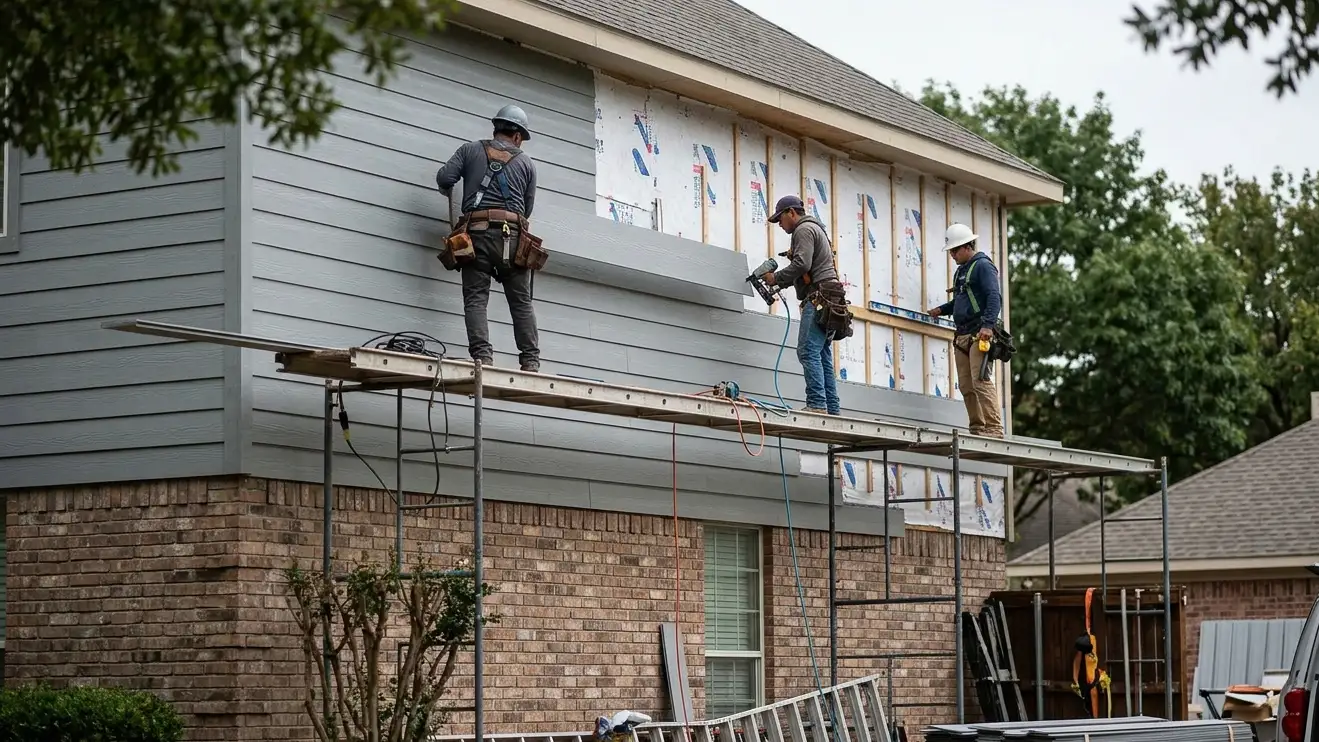
Siding installation means removing worn cladding, repairing the sheathing, adding house wrap and window flashing, then putting on new fiber cement, engineered wood or vinyl siding with fresh trim. You need it when siding is cracked, warped, rotting or letting water in. For siding areas on a typical Dallas home, expect roughly $9,640 to $27,850 depending on material and wall area.
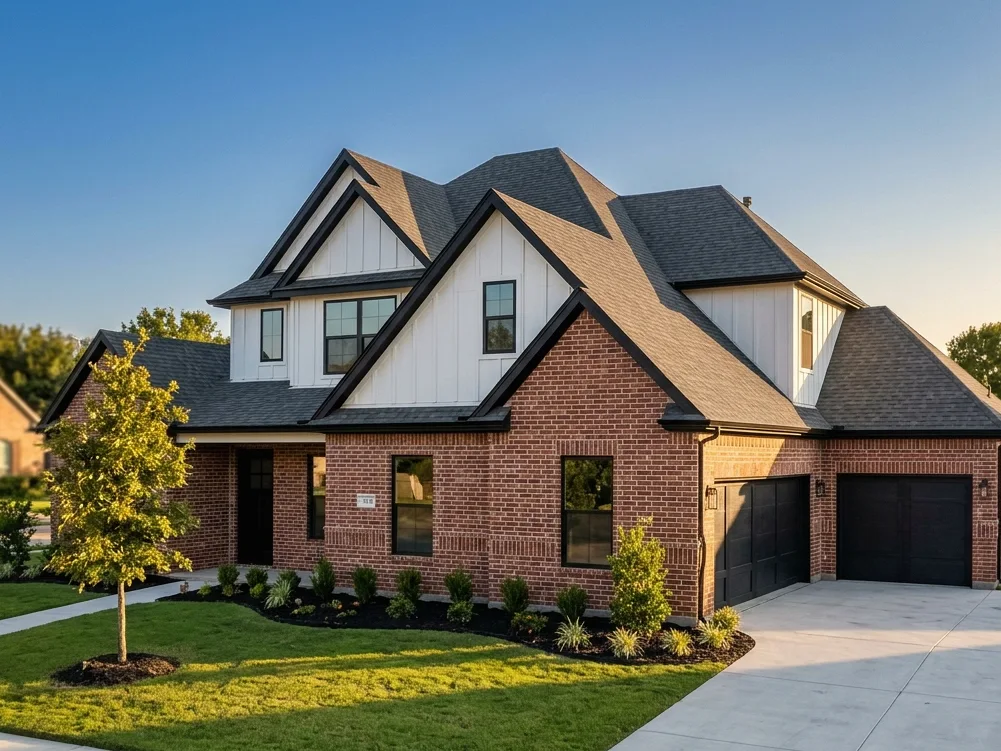
Most Dallas homes are brick on the first floor with siding above, on gable ends, dormers and second-story walls. Those siding areas take the hardest sun and wind on the house, and once they start to fail, water gets behind them and into the sheathing where nobody sees it until a wall goes soft. New siding is a chance to fix that whole wall assembly: the house wrap, the flashing at every window and door, the trim, and the cladding on top of it.
We install fiber cement lap and panel siding, LP SmartSide engineered wood, and insulated and standard vinyl. Our crews strip the old siding down to the sheathing, replace any rotted boards, wrap the wall, flash each opening, and then install the new cladding to the manufacturer's spacing, nailing and clearance rules. Because we also do roofs, we pay close attention to where siding meets the roofline, which is where many wall leaks actually begin.
Signs your siding is due for replacement
- Swollen or rotted lower courses: Hardboard and older wood siding near the ground or roofline soaks up water and starts flaking.
- Hail-cracked vinyl: Brittle, aged vinyl shatters in a hailstorm, leaving holes and split laps across the windward walls.
- Warped or buckled panels: Vinyl nailed too tight, or placed near a reflective window, ripples and pulls loose in summer heat.
- Paint that will not hold: Siding that needs repainting every couple of years has usually taken on moisture behind the face.
- Soft wall sheathing: Pressing on the wall below a window feels spongy, a sign water has been getting behind the cladding.
- Discontinued profile: Repairs no longer blend because the original siding line is out of production.
What our crews do on a siding job
- We tear off the old siding and inspect every sheathing panel, replacing wood that is soft, delaminated or stained by water.
- A weather-resistant house wrap goes on, lapped shingle-style from the bottom up and taped at every seam.
- Windows and doors get flashing tape and head flashing so water drains outward instead of running into the wall.
- Kickout flashing goes in wherever a roof edge dies into a sidewall, the single most common wall leak we find.
- New siding is installed to the manufacturer's nailing pattern, gap and ground clearance, with trim at corners, windows and frieze boards.
- Joints and penetrations get sealed where the system calls for it, and fiber cement or LP gets a factory finish or field paint.
Siding choices for North Texas heat and hail
Hail is what most often decides siding here. Standard vinyl that has spent fifteen or twenty years in Dallas sun turns brittle, and a storm with even moderate hail can crack it across a whole wall. Fiber cement and LP SmartSide handle those impacts much better, typically showing dents or scuffs rather than holes. On homes where hail has already claimed the vinyl twice, switching to a heavier cladding usually makes sense, and some homeowners pair it with a Class 4 roof.
Heat is the other force. West and south walls see the longest afternoon sun, and dark vinyl on those walls can warp, especially when a low-E window nearby reflects concentrated light onto it. Fiber cement and engineered wood stay put in the heat, and their paint lasts longer in lighter colors. Many suburban neighborhoods around Dallas require HOA architectural review for siding changes, so we gather the color, profile and material details your HOA asks for before work starts.
Siding materials we install
Each siding material handles Dallas hail, heat and moisture differently, and they look different up close once the paint or color has weathered a few summers. Here is how the main choices compare so you can weigh durability, upkeep and budget on your own house.
| Material | Best for | What to know |
|---|---|---|
| Fiber cement lap | Homes that need hail and fire resistance | Heavy and stable, takes paint well; needs careful cutting and correct clearance from roofs and ground |
| Fiber cement panel and batten | Modern farmhouse gables and accent walls | Clean vertical look; seams and trim details decide how well it sheds water |
| LP SmartSide engineered wood | Wood look with lighter weight | Treated strands resist rot and impact well; cut edges must be primed and painted |
| Insulated vinyl | Lower cost with better impact feel | Foam backing stiffens the panel and adds a little R-value; still softer than fiber cement in hail |
| Standard vinyl | Budget jobs and matching existing vinyl | Never needs paint, but turns brittle with age and cracks in hard hail |
What siding installation costs in Dallas
| Fiber cement lap, per sq ft installed | $8.65 to $13.40 |
| LP SmartSide, per sq ft installed | $7.90 to $12.25 |
| Insulated vinyl, per sq ft installed | $6.35 to $9.80 |
| Sheathing replacement, per sheet | $84 to $139 |
| Kickout flashing, each location | $65 to $148 |
Wall area is the main driver, followed by material, the number of windows and corners, and how much sheathing turns out to be rotted under the old siding. Two-story gables need staging or lifts. Fiber cement costs more than vinyl partly because it is heavier to handle and must be painted. Full-wrap homes with no brick cost noticeably more than these ranges.
How the job runs
Call
Tell us what failed. Overflowing gutters, a sagging run, cracked siding after hail or bare wood showing: describe it and we set a visit.
Measure
Measure and match. We measure runs, wall areas and downspout locations, and match colors and profiles to what is already on the house.
Price
Written proposal. Material, gauge or thickness, color and the full price are written down before work begins.
Install
Built to drain. We set pitch, fasteners and flashing so water leaves the house the way it should during a North Texas downpour.
Clean up
Haul away and check. Old material leaves with us, and we run water through new gutters before we call it done.
Siding Installation questions
Is fiber cement or LP SmartSide better for a Dallas house?
Both handle hail and heat far better than vinyl. Fiber cement is heavier, does not burn, and is very stable, but it must be kept clear of roof surfaces and ground and needs paint. LP SmartSide is lighter, takes impacts well, and looks more like wood, but cut edges have to be sealed. On many Dallas homes the choice comes down to the look you want and the HOA's rules.
Should the old siding come off or can new siding go over it?
We remove it. Covering old siding hides any rot in the sheathing and leaves no way to install proper house wrap and window flashing, which is where most wall leaks start. Layering also builds out the wall, so window and door trim no longer line up. Tear-off adds disposal cost, but it is the only way to know what the wall behind looks like.
Can new siding go on just the second floor?
Yes, and on the many Dallas homes with brick below and siding above, that is the usual job. Where siding meets the top of the brick, we add flashing so water running down the new siding drips clear of the brick ledge. If only one or two walls are failing, we can also do part of the house, though matching new material to aged siding nearby is harder.
Does hail damage to siding go on the same claim as the roof?
Usually. Siding, gutters, window screens and the roof all fall under the same dwelling coverage on most Texas homeowner policies, and they are typically handled together when one storm hit them all. One wind and hail deductible applies to the claim. We document siding damage wall by wall with photos so the adjuster can see which elevations took the hits.