Forest Hills lies southeast of White Rock Lake, across Garland Road from the Dallas Arboretum and stretching east toward Ferguson Road. Its winding streets climb gentle hills under some of the densest tree cover in East Dallas, and many lots back onto creeks that feed the lake. Homes span several decades: 1930s and 1940s cottages near the lake, a large number of 1950s and early 1960s mid-century ranches with low rooflines and clerestory windows, and some newer houses tucked onto rebuilt lots.
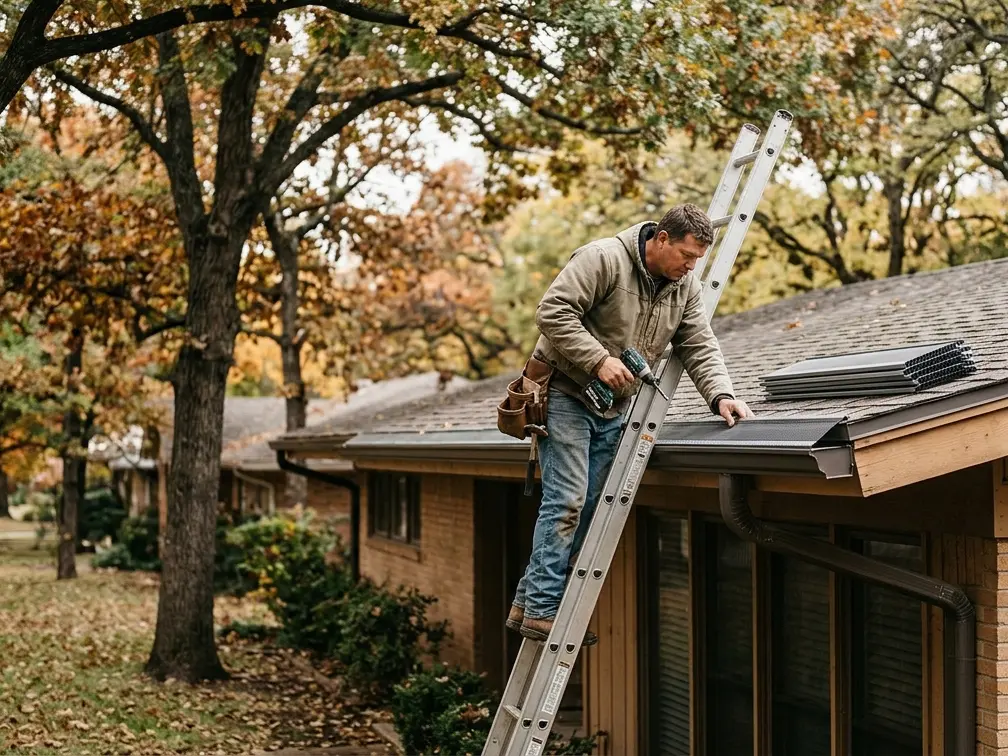
Repairs here follow the trees. Leaves and pine straw collect in valleys and gutters until water backs up under shingle edges. Shaded slopes stay damp and grow algae. Branches rub through shingles and, in a hard storm, punch through the deck. We clear and repair, then add gutter guards sized for the canopy over your house, replace rotted drip edge and fascia and recommend arborist work when limbs sit directly on the roof.
Forest Hills is one of the Dallas neighborhoods our crews reach straight from the McKinney Avenue office. See the full Dallas roofing page for citywide permit and storm notes.
Homes and roofs in Forest Hills
Forest Hills mixes 1930s and 1940s cottages, many 1950s and early 1960s mid-century ranches with low-slope or butterfly rooflines, and some newer homes. Low mid-century roofs with wide overhangs and flat sections are common. Lots are irregular and hilly, often without alleys. Original plank decking, built-up roofing on flat sections and heavy tree cover are the defining roof traits, and clerestory windows under low eaves need careful flashing.
Storm exposure in Forest Hills
Forest Hills catches the same spring hail as the rest of East Dallas, mostly between March and June, but in this neighborhood wind is often the bigger threat because of the trees. The May 28, 2024 windstorm brought down large limbs across the White Rock Lake area. Shade also keeps roofs wet longer after summer storms, speeding wear on the north faces.
Roofing jobs we do most in Forest Hills
- Gutter guards: we install fine-mesh guards that stand up to heavy leaf and needle drop from the Forest Hills canopy.
- Valley leak repair: packed valleys that let water back up get cleared, re-underlaid and reshingled.
- Mid-century flat roofs: low-slope and flat sections on 1950s homes get modified bitumen or TPO in place of old built-up roofing.
- Limb damage repair: we tarp and rebuild decking and shingles after branches come down in storms.
- Algae cleanup: shaded slopes get soft-washed and fitted with metal strips that slow regrowth.
Good to know before we start
- Hilly lots: sloped yards and no alleys mean we stage on the driveway or street and carry materials up by hand on some properties.
- Overhanging limbs: branches resting on the roof should be trimmed first, or new shingles will wear in the same spots.
- Creek-side homes: we use debris netting on lots that slope to a creek so scrap and nails stay out of the water.
Around the area
- Dallas Arboretum
- White Rock Lake
- Garland Road
- Ferguson Road
- White Rock Creek
Forest Hills roofing questions
Which gutter guards work best under Forest Hills trees?
For the mix of oak leaves, pecan debris and fine tassels here, stainless micro-mesh guards on a rigid frame hold up best. Large-hole screens let small debris through and clog anyway. Even good guards need a light cleaning now and then under heavy canopy, and we set them so they do not lift your shingle edge.
My Forest Hills mid-century home has a flat roof section. Can it be fixed without changing the look?
Yes. Flat and low-slope sections are part of the mid-century design, and a modern membrane keeps the same profile. We remove the old built-up roof, repair decking, add tapered insulation if water ponds and install modified bitumen or TPO. From the street the house looks the same, just without the leaks.
How often should I have my Forest Hills roof checked?
Under dense trees, once a year and after any strong windstorm is a good habit. We look for limb scuffs, packed valleys, clogged gutters and algae, which build up faster here than on open lots. Catching a soft valley or a cracked shingle early keeps a small repair from turning into rotted decking.