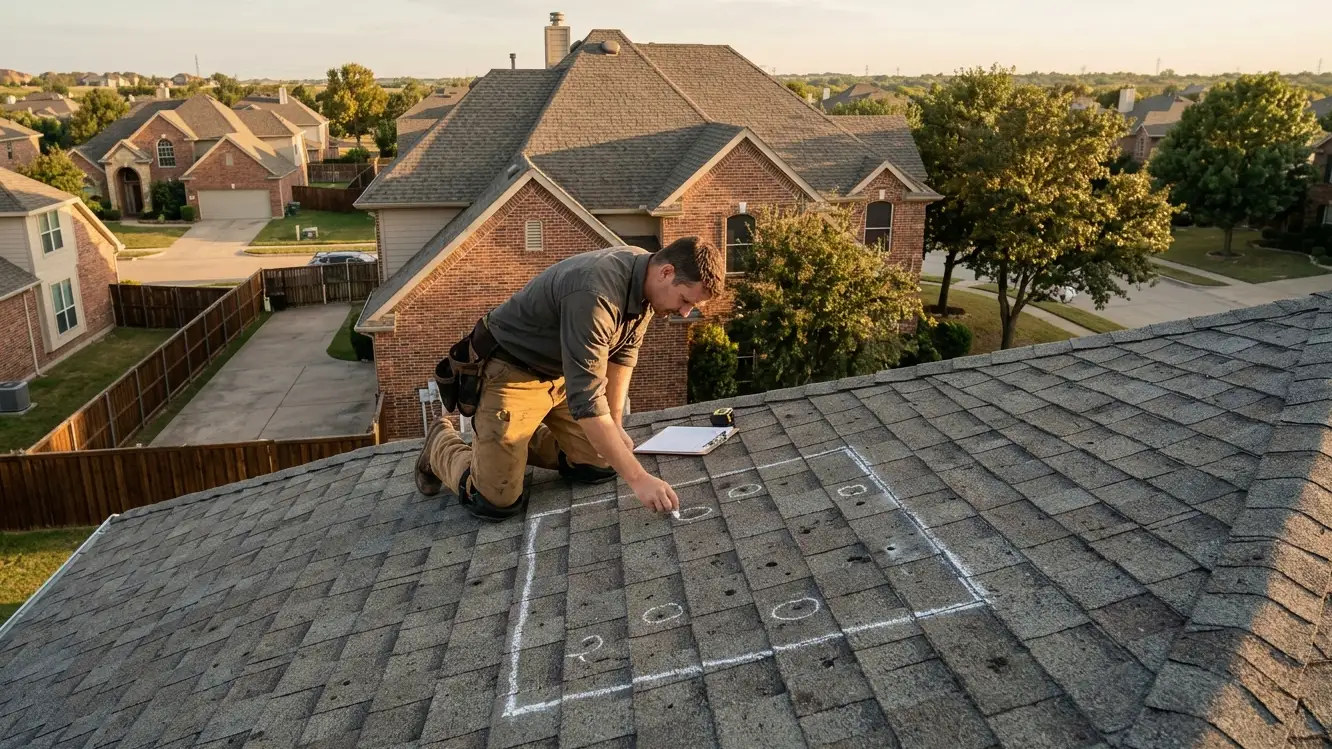
A roof inspection is a hands-on check of the roof surface, flashing, ventilation and attic for damage, leaks and wear. Dallas homeowners need one after hail or wind, before buying or selling, or once a roof passes ten to twelve years. Most inspections here run $0 to $385, with free storm checks and paid reports for real estate.
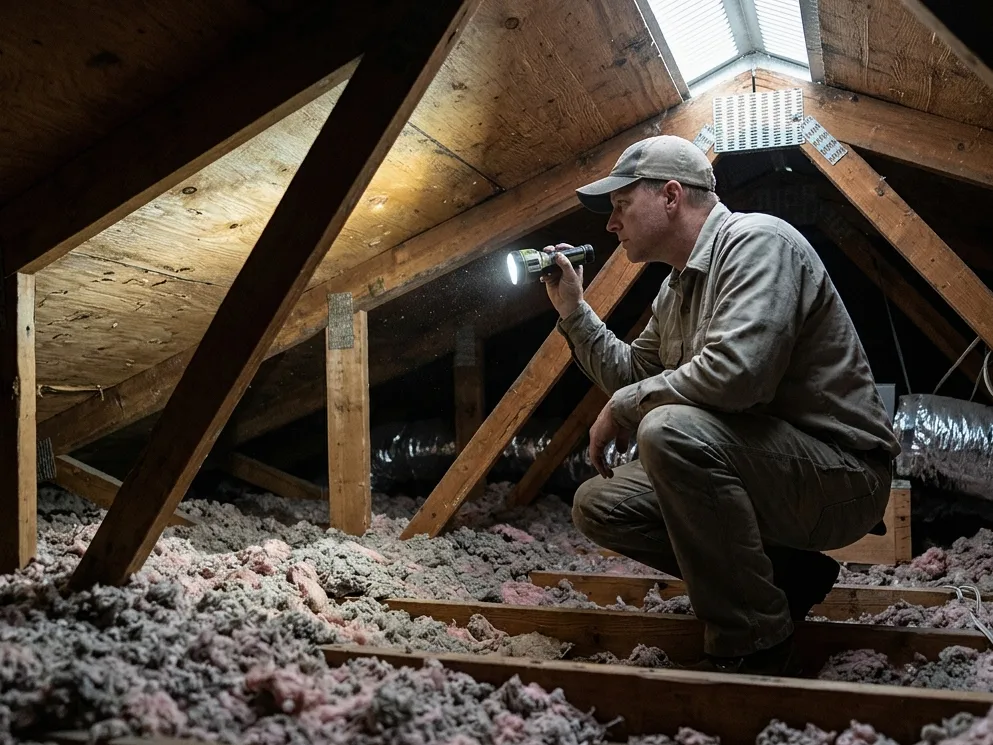
A drive-by glance or a drone flyover can spot missing shingles, but it cannot tell you whether a shingle has lost its seal, whether a nail is backing out, or whether the decking flexes underfoot. Our inspections are done on the roof, slope by slope, and then in the attic with a flashlight and moisture meter. We look at roofing material, flashing, pipe boots, vents, gutters, decking and the underside of the roof for stains, mold or daylight. You get photos of every issue we find, labeled by location, not a vague checklist.
Homeowners call us for inspections at a few common moments: after a spring storm, before listing or buying a house, when a ceiling stain shows up, or simply because the roof is pushing fifteen years and nobody has looked at it closely. We also inspect roofs for people planning solar, because panels sitting over a roof with a few years left can mean paying for removal and reinstall sooner than expected. Each report ends with a plain priority list: fix now, watch, or leave alone.
Good times to schedule a roof inspection
- After a hail or wind event: Damage from a spring storm is easiest to document in the first weeks, before more weather muddies it.
- Before solar goes on: Panels should sit on a roof with enough life left to match the solar system.
- Ceiling stains or attic odors: Water is getting in somewhere, and the stain is rarely right below the entry point.
- Roof age past a decade: Asphalt shingles in Texas heat often show seal failure and granule loss well before the label age.
- Prior repairs you did not watch: A previous owner or handyman patched something, and you want to know what is under it.
- Insurance renewal or policy change: Your carrier asked for roof condition photos or a roof age statement.
What our roof inspection covers
- We walk every accessible slope and check shingles or tile for hail bruising, creasing, granule loss and lifted tabs.
- Flashing at chimneys, walls, skylights and valleys is checked for gaps, rust, missing kickouts and caulk-only patches.
- Pipe boots, exhaust caps, ridge vents and box vents are examined for cracks, missing fasteners and poor sealing.
- In the attic we look for stains, wet insulation, mold, daylight around nails, and signs of heat damage to the deck.
- Gutters, fascia and soffit are checked for rot, pulled hangers and overflow marks that point to drainage problems.
- You receive a dated photo report sorted by urgency, with repair prices when any work is needed.
What we watch for on Dallas roofs
North Texas roofs take a beating that some homeowners never see. Hail from storms between roughly March and June bruises shingles without knocking them loose, and the damage only shows when you press on the mat and feel it give. Wind events like the May 28, 2024 storm, with gusts over 80 mph across Dallas, break shingle seals so tabs flap in the next storm. A thorough inspection after each season catches these early, while they are still a repair line instead of a reroof.
Heat is the quiet problem. Attics here routinely pass 140°F in summer, which ages shingles from below and cooks rubber pipe boots until they crack. Foundation movement on Blackland Prairie clay can twist a roofline enough to open flashing at walls and chimneys. We see this most in older neighborhoods like Lake Highlands, Casa Linda and Wynnewood, where homes have shifted for decades and earlier roofers sealed every gap with caulk instead of new metal.
Types of roof inspections we do
Not every inspection needs the same depth. A post-storm check focuses on hail and wind marks, while a real estate inspection covers remaining life and attic condition in detail. Here is how we match the visit to the reason you are calling.
| Inspection type | Best for | What to know |
|---|---|---|
| Storm damage check | Homeowners after hail or high wind | Focuses on test squares, soft metals and collateral damage that adjusters look for. |
| Leak investigation | Active drips or new ceiling stains | Includes attic tracing and sometimes a water test to find the entry point. |
| Full condition inspection | Roofs over ten years old or with unknown history | Covers remaining life, ventilation and attic condition with a written report. |
| Pre-solar inspection | Owners about to sign a solar contract | Confirms the roof can outlast the panels or flags work to do first. |
| Annual check | Owners who want problems caught early | A shorter visit each spring or fall, with photos compared to the last report. |
What roof inspection costs in Dallas
| Post-storm damage check | $0 |
| Leak investigation with attic tracing | $145 to $265 |
| Full condition report with photos | $185 to $340 |
| Tile or slate roof inspection | $225 to $385 |
| Water test for hard-to-find leaks | $165 to $295 |
Storm damage checks are free because they often lead to an insurance claim or repair. Detailed written reports for real estate, solar companies or insurers cost more because they take longer to prepare. Price also rises for very steep roofs, three-story homes, tile or slate that needs special care to walk, and leak tests that need a second visit.
Before filing, run your numbers through our wind and hail deductible calculator.
How the job runs
Call
Book the visit. Tell us why you want the roof looked at: a storm, a sale, an insurance question or plain age. That decides how we document it.
Climb
Slope-by-slope inspection. We check shingles or panels, flashing, vents, gutters and the attic side, and mark storm hits so they show clearly in photos.
Report
Photos and findings. You get dated photos and plain findings: what is damaged, what is worn, what is fine and what can wait.
Plan
Repair, claim or wait. We tell you which of the three makes sense. If a claim fits, we can meet the adjuster on the roof and show what we found.
Follow up
Records you keep. Keep the report with your policy papers. It helps with the next storm, the next sale and the next renewal.
Roof Inspection questions
Can a drone inspection replace someone walking my roof?
Drones are useful for steep or fragile roofs and for a quick overview, but they miss what you can only feel: soft hail bruises, broken seals, loose nails and spongy decking. We use drone photos as a supplement on some homes, but a walked inspection plus an attic check is what gives a reliable answer.
How long does a roof inspection take?
Most single-family homes take forty-five minutes to an hour and a half on the roof and in the attic. Large two-story houses, tile roofs and leak investigations can take longer. We send the photo report the same day or the next morning, so you are not waiting on paperwork to make a decision.
Do I need to be home for the inspection?
For the roof itself, no, as long as we can reach the backyard. For the attic, someone needs to let us in. Many homeowners prefer to be there so we can show them photos on the spot and point out what we found on the ceiling below any stain.
What happens if you find nothing wrong?
Then we tell you that and give you the photos to keep. A clean report is useful: it documents the roof's condition on a known date, which helps if you file a claim after a future storm, and it gives a buyer or insurer a baseline. We do not invent repairs to justify a visit.