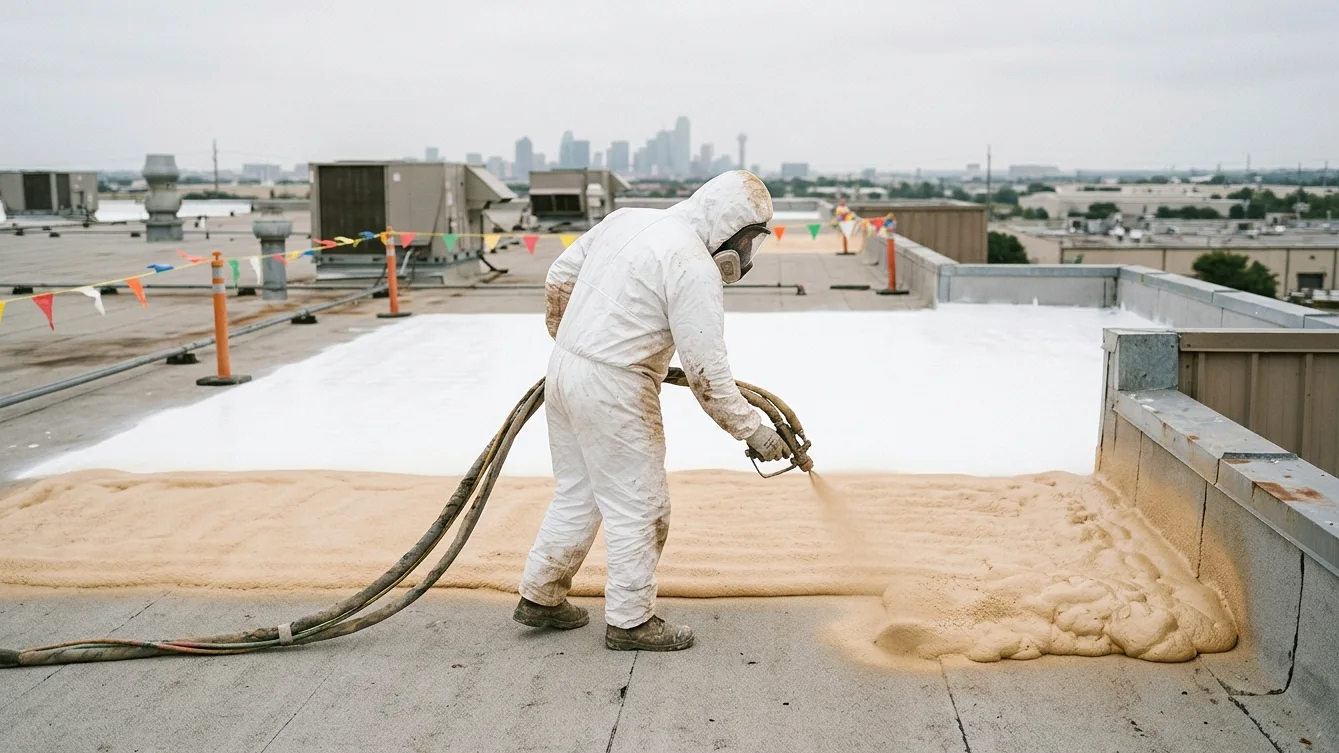
Spray foam roofing is closed-cell polyurethane foam sprayed over a roof deck or existing roof and sealed with a silicone or acrylic topcoat. It suits low-slope buildings that need insulation, better drainage and fewer seams. In Dallas, a new SPF system typically costs $4.65 to $8.35 per sq ft, with foam thickness, prep work and topcoat choice setting where a building falls.
Spray polyurethane foam roofing, or SPF, is a liquid sprayed onto the roof that expands into a solid, continuous layer of closed-cell insulation. It bonds to concrete, metal, wood and most existing roofs, fills gaps around penetrations, and can be built up thicker in low areas to fix drainage. Foam on its own breaks down in sunlight, so every SPF roof gets an elastomeric topcoat, usually silicone or acrylic, that shields the foam and reflects heat back off the building.
We install SPF on warehouses, retail buildings, churches, schools and metal buildings around Dallas, and we maintain and recoat existing foam roofs. Each job starts with a look at the deck, the existing roof and its moisture levels, since foam cannot fix a wet roof underneath it. Our crews spray in passes to the planned thickness, shape slope toward drains, and apply the topcoat at the specified mil thickness. Afterward, we set a recoat schedule with the owner so the system stays protected.
Signs spray foam could suit your building
- Ponding that will not drain: water that sits in low spots after rain can be handled by spraying extra foam to build slope.
- Many penetrations and odd shapes: roofs crowded with curbs, pipes and equipment are easier to seal with foam than with sheet goods.
- High cooling bills: a building with little roof insulation gains heat through the deck all through a Dallas summer.
- An aging metal roof: rusting panels and leaking fasteners can be covered and insulated in one step with foam.
- Old BUR or mod bit that is mostly dry: a sound existing roof can often stay in place under the new foam.
- Existing foam with a worn topcoat: exposed tan or brown foam, chalking or pinholes mean the topcoat needs renewing.
Steps in a spray foam roof installation
- We run a moisture survey and core cuts on existing roofs, then remove and replace any wet insulation or damaged decking.
- The surface is cleaned, loose gravel is removed, and metal or other substrates are primed where the foam maker calls for it.
- Closed-cell roofing foam, typically 2.5 to 3 pounds per cubic foot in density, is sprayed in passes to the planned thickness.
- Extra foam is built up in low areas and around drains to create tapered slope, so water runs off instead of ponding.
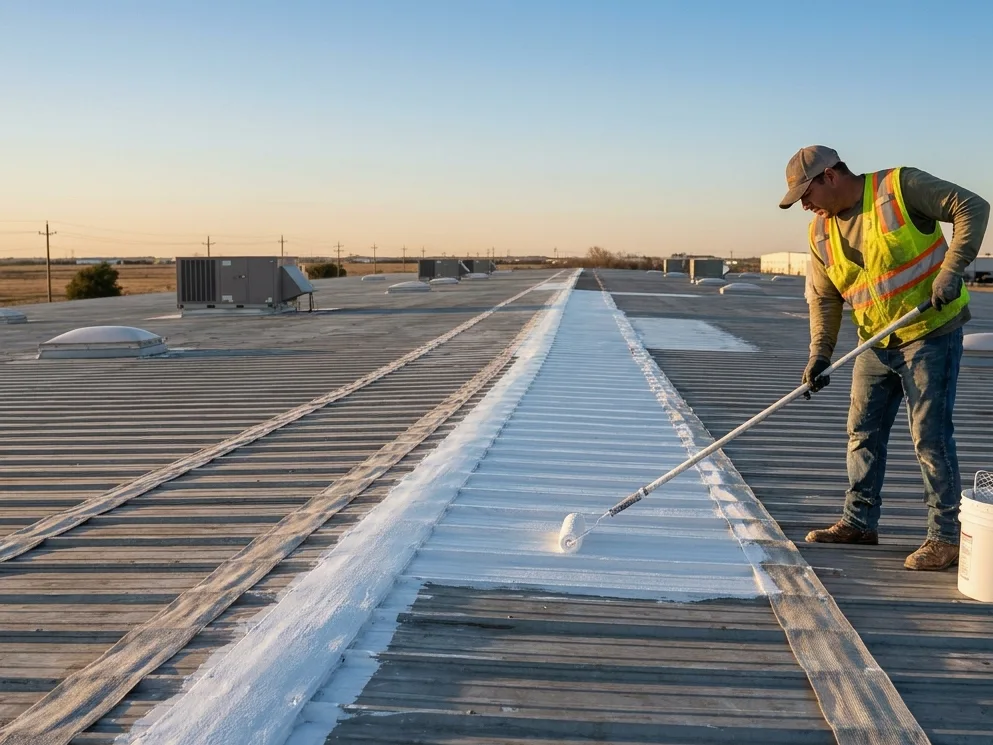
- The topcoat goes on in one or more passes, often with granules broadcast into walkways, and we check its thickness with a gauge.
- We walk the finished roof, record foam and coating thickness readings and set a schedule for inspections and recoats.
Spray foam roofing in North Texas heat and hail
Closed-cell roofing foam adds roughly R-6 to R-6.5 per inch of thickness, so a few inches can bring a poorly insulated building up to a much better level. That matters on Dallas buildings where summer sun bakes the roof for months, and the reflective topcoat cuts heat gain further. The foam also forms one continuous layer across the roof, doing away with the laps and seams where so many leaks on older commercial roofs begin.
Hail is the concern owners raise most, since DFW sits in hail alley and peak season runs roughly March through June. Foam is firm, but large hail can dent it and fracture the topcoat, leaving small openings where UV and water work in. Thicker topcoats and broadcast granules help. After a storm, we inspect for bruises and fractures and seal damaged spots before moisture gets in, which keeps minor hail damage from turning into foam replacement.
Topcoat and foam choices for Dallas buildings
The foam supplies insulation and slope, but the topcoat decides how the roof handles sun, ponding, foot traffic and hail, and the choice shapes every recoat that follows. Here is how the main options compare on the low-slope buildings we work on around Dallas.
| Option | Best for | What to know |
|---|---|---|
| Silicone topcoat | Roofs with some ponding left after foam build-up | Tolerates standing water and strong sun; future recoats generally need silicone again |
| Acrylic topcoat | Well-drained roofs on a tighter budget | Costs less and reflects well, but should not be used where water sits after rain |
| Urethane base with silicone top | Roofs with heavy traffic or high hail exposure | Tougher wearing layer at a higher price; often used around equipment walkways |
| Granule-broadcast topcoat | Walkways and roofs that see regular service visits | Granules add grip and some hail resistance, but make the surface harder to clean |
| Added foam thickness | Buildings that need more insulation or slope | Each extra inch adds R-value and drainage, and raises the cost per square foot |
What spray foam roofing costs in Dallas
| Moisture survey and core cuts | $445 to $1,185 |
| New SPF with acrylic topcoat, per sq ft | $4.65 to $6.90 |
| New SPF with silicone topcoat, per sq ft | $5.35 to $8.35 |
| Recoat of an existing foam roof, per sq ft | $1.85 to $3.45 |
| Hail damage foam repair, per spot | $45 to $125 |
Foam thickness and topcoat type set the base price, with thicker foam and silicone at the higher end. Prep work changes the total most: cutting out wet insulation, removing gravel and repairing deck damage. Tapered build-up for ponding adds foam, while rooftop equipment, parapets and access raise labor. Recoats on existing foam cost far less than a new system when they are done on schedule.
How the job runs
Call
Talk to us about the building. Tell us the building type, roof size, current membrane and whether there is an active leak, and we schedule a survey.
Survey
Core cuts and moisture. We walk the roof, check seams, drains and edges, take core samples where needed and map wet insulation.
Propose
Options with numbers. Repair, coating, recover or full replacement are priced side by side so owners and managers can plan the budget.
Schedule
Work around tenants. We plan staging, noise and access around business hours, and pull any permit the city requires.
Install
Membrane and details. Crews install insulation, membrane and flashing details, then water-test drains and transitions.
Close
Turnover package. You receive photos, material data and maintenance notes for the building file.
Spray Foam Roofing questions
How often does a spray foam roof need to be recoated?
The cycle depends on the topcoat chemistry, how thick it went on, sun exposure and hail. Manufacturer warranty terms depend on the product line and thickness, and they spell out recoat timing. We inspect foam roofs on a regular schedule and recoat when the topcoat thins, before the foam is exposed, since a recoat costs far less than repairing sun-damaged foam.
Can spray foam go directly over our old metal roof?
In most cases, yes. We clean the panels, treat rust, replace loose or missing fasteners and prime as needed. Foam then fills the panel ribs and covers every screw and lap, adding insulation in the same step. We check the purlins and panels for structural soundness first, since foam should never be used to hide panels that are rusted through.
What does hail damage look like on a foam roof?
Look for small dents or pockmarks, cracked or crushed topcoat, and spots where tan foam shows through. Light hail may only scuff the coating, while large hail can break through into the foam. Damaged spots let UV and water reach the foam, so we seal them quickly with compatible coating or patch foam and document everything if you choose to file a claim.
Will spray foam fix ponding water on our flat roof?
It can, because foam can be sprayed thicker in low areas to build slope toward drains or scuppers. We map the low spots, plan the taper and check slope as we spray. Severe sagging from deck damage still needs structural repair first, but on most roofs careful build-up removes the ponding or reduces it to a minor amount.