Stay on the ground for this part
After a hailstorm rolls through Dallas, the first instinct is to grab a ladder and go look. Please don't. Wet shingles are slick, loose granules act like ball bearings under your shoes, and a two-story roof over a concrete driveway is no place to learn your footing. Insurance adjusters and roofers carry harnesses and roof boots for a reason.
The good news is that hail leaves a trail. The same ice that hit your shingles also hit your gutters, your fence, your air conditioner and your patio furniture. Those softer surfaces often show damage more clearly than the roof does, and you can read most of them from the yard in about fifteen minutes. What you find tells you whether it's worth calling someone for a closer look. If a neighbor's roof is already being inspected, ask what they found, since houses on the same block usually take similar hits.
Start with the soft metals
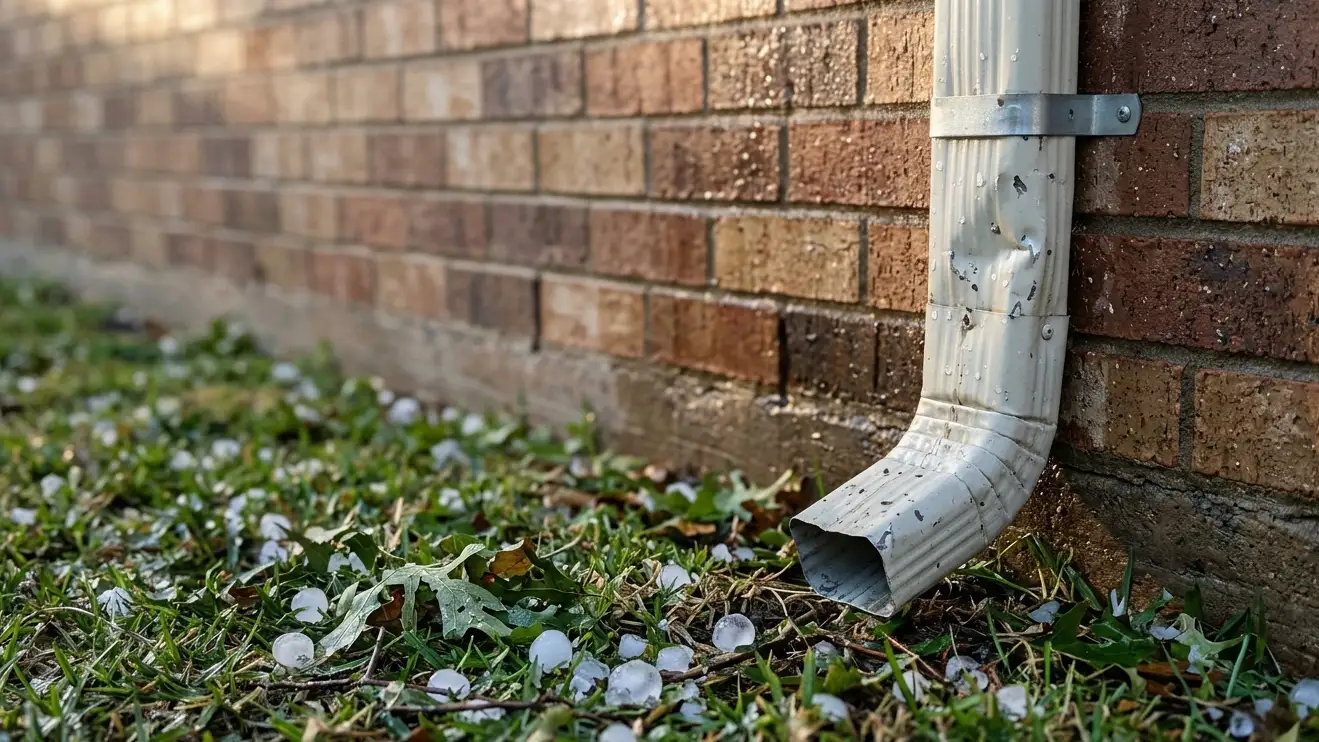
Aluminum and thin steel dent easily, so they work like a record of the storm. Walk the perimeter of the house and look closely at the following. Dents that are round and fairly even in size usually point to hail rather than a stray branch or a ball from the neighbor's yard.
- Gutters: run your eye along the top lip and the face. Dings on the front edge show hail size and which side took the hits.
- Downspouts: check the elbows and the straight runs, especially on the side of the house that faced the storm.
- Roof vents: box vents and turbine vents are visible from the street. Dented caps or flattened fins are a strong sign.
- Air conditioner condenser: bent fins on top of the unit mean the hail was hard enough to matter.
- Mailbox, grill lid, metal awnings and window trim wrap: small items that are easy to compare against what you saw before.
Look at what's lying on the ground
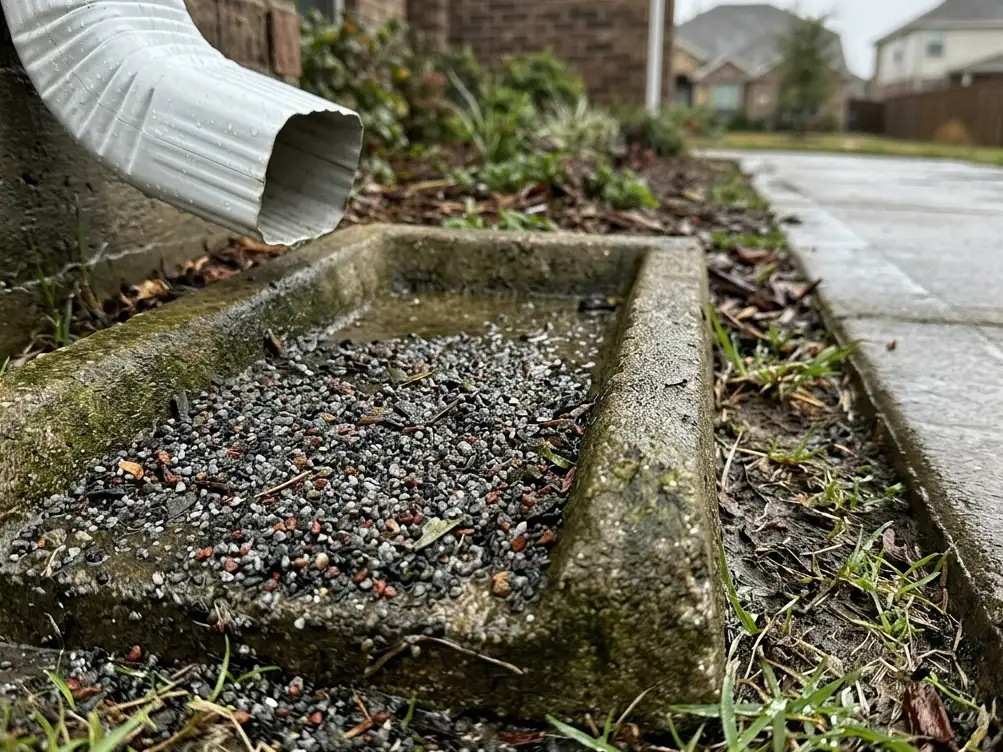
Granules are the sand-like coating that protects asphalt shingles from the sun. When hail knocks them loose, they wash down the roof and collect where water exits. Look in the splash area under each downspout and along the edge of the driveway. A small amount after any rain is normal on an older roof. A heavy, dark pile after a single storm is not.
Other clues are scattered around the yard. Shredded leaves and stripped twigs under your oaks and pecans mean the hail had real force. Window screens with small tears or bulges, spatter marks on painted wood fences, and chipped paint on window sills all show impact. If hailstones are still on the ground, photograph a few next to a coin or a tape measure. Size matters, and hail around one inch and larger is the range where asphalt shingles commonly start to bruise.
What you can see on the roof from the yard
A pair of binoculars helps more than you'd think. Stand back far enough to see each slope and look for dark spots where granules have been knocked away, exposing the black mat underneath. On a newer roof they can look like scattered polka dots. Also look for torn or missing shingles, which are more often a wind problem but frequently come with the same storm.
Check the ridge cap along the peak, since it sits higher and takes direct hits. Look at skylight domes for cracks and at the metal flashing around chimneys for dents. Pay the most attention to the slopes that faced the storm. Hail driven by strong wind hits one side of a house much harder, so the back slope can look fine while the front is beaten up.
Don't forget the parts of the house that aren't roof. Painted siding, wood trim and the tops of window frames can show chips and spatter, and vinyl siding can crack or punch through in larger hail. Fiber cement holds up better but can still chip at the corners. Plastic skylight domes sometimes craze in ways that only show when the light hits them at an angle. If the walls facing the storm took obvious hits, the roof above them almost always did too, even when the shingles look normal from the yard.
Write it down while it's fresh
Memory fades quickly, and claims depend on details. Note the date and approximate time the hail fell, how long it lasted and how big the stones looked. Take photos of every dent and every granule pile before rain washes the evidence away, and keep them in one folder on your phone. Wide shots that show where the damage is on the house help as much as close-ups.
Talk to neighbors too. If several houses on your street are getting roofs inspected, that tells you the storm hit hard enough to matter. The National Weather Service posts local storm reports that show where hail fell and how large it was, which can help tie your damage to a specific date. Your policy also sets a deadline for reporting a loss, so read it rather than waiting a season to decide.
When it's time for a closer look
If you found two or more of the signs above, the roof deserves a hands-on inspection. Hail bruises on shingles are often invisible from the ground. The mat underneath can crack while the surface looks normal, and those bruises can turn into leaks months later during a hard spring rain. Waiting until a stain shows up on the ceiling usually means more repair work and a harder conversation with your insurer.
North Texas hail season runs roughly March through June, and DFW sits squarely in hail alley, so most roofs here take several hits over their life. A good inspection documents each slope with photos, marks hits in test squares, checks soft metals and vents, and gives you an honest read on whether the damage is worth a claim. If you'd like our crew to do that, call us at (214) 910-6728 any time, day or night.
Questions homeowners ask
Can hail damage a roof without leaving dents on my gutters?
It can, but it's less common. Some newer gutters are thicker aluminum and resist small hail, while shingles can still bruise. If your gutters look clean but you see granule piles under downspouts or dark spots on the roof through binoculars, the roof still deserves a closer look before you rule out damage.
How soon after a storm should I check for hail signs?
As soon as it's safe, ideally within a day or two. Granules wash away in the next rain, hailstones melt within an hour, and leaves get blown off. Early photos give you a clear record tied to the storm date, which helps if you decide to file a claim later in the season.
Does dark spotting on shingles always mean hail?
Not always. Dark streaks that run down the roof are often algae, and blisters on older shingles can pop and leave small bare spots. Hail spots tend to be random, roughly round and scattered across a slope, with matching dents on nearby metal. A hands-on inspection is the reliable way to tell them apart.