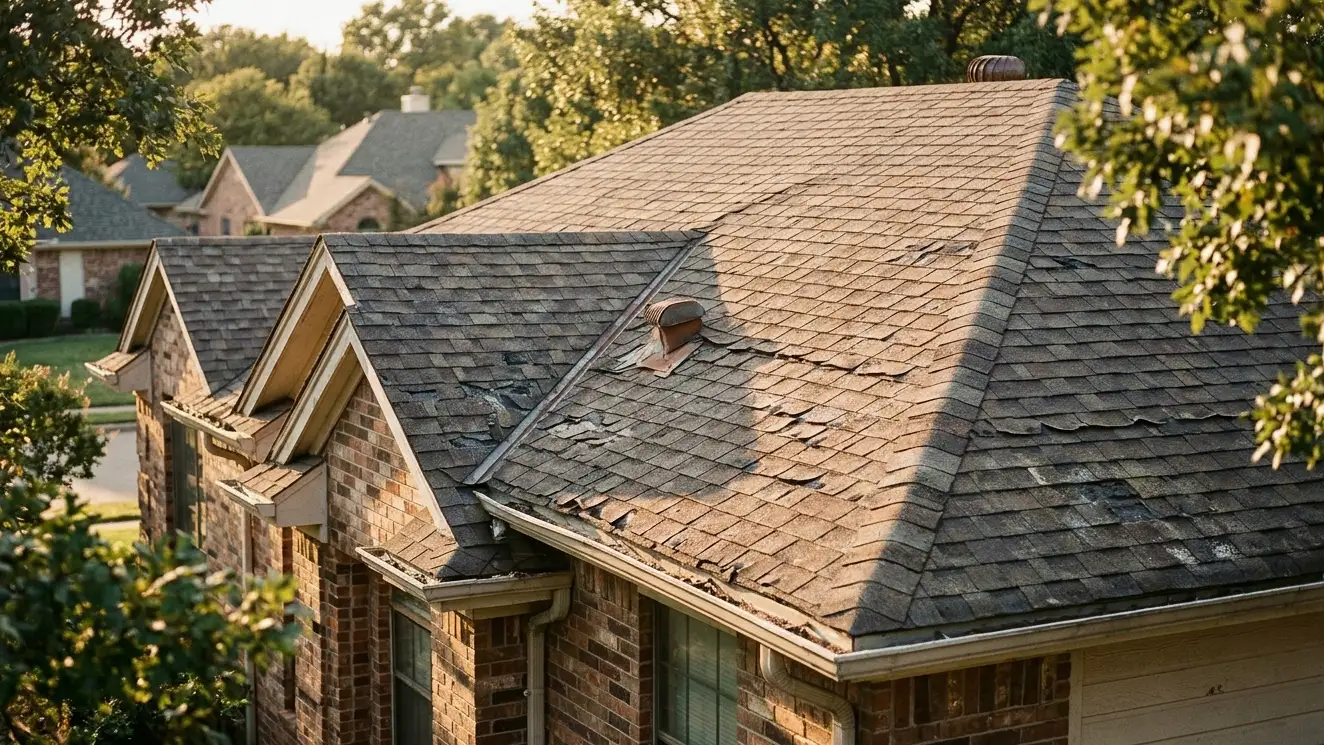
Why North Texas is hard on roofs
A roof in Dallas lives a tough life. Summer sun beats on it for months, and attic temperatures often exceed 140°F, so shingles bake from both sides. Asphalt slowly dries out and hardens in that heat, which is why an older Texas roof feels stiff and brittle while a roof of the same age in a milder climate still flexes.
Then there's the daily swing. A roof can cool sharply when an afternoon thunderstorm rolls through, then heat right back up. That repeated expansion and contraction works fasteners loose and stresses flashing. Add DFW's spot in hail alley, a peak hail season from roughly March through June, and wind events like the May 28, 2024 storm with gusts over 80 mph, and it's easy to see why roofs here rarely reach the longest number printed on the wrapper.
Typical lifespans by material
These are realistic ranges for well-installed roofs in North Texas with decent ventilation and no major storm damage. A roof that takes a serious hail hit may need replacing far sooner, regardless of material.
- Three-tab asphalt shingles: about 12 to 18 years
- Architectural asphalt shingles: about 18 to 25 years
- Impact-resistant Class 4 shingles: similar to architectural, with better odds in moderate hail
- Standing seam metal: about 40 to 60 years, with paint finishes that may fade sooner
- Stone-coated steel: about 35 to 50 years
- Concrete or clay tile: 50 years or more for the tile itself, with underlayment that often needs replacing at 20 to 30 years
- TPO and modified bitumen on low-slope sections: about 15 to 25 years
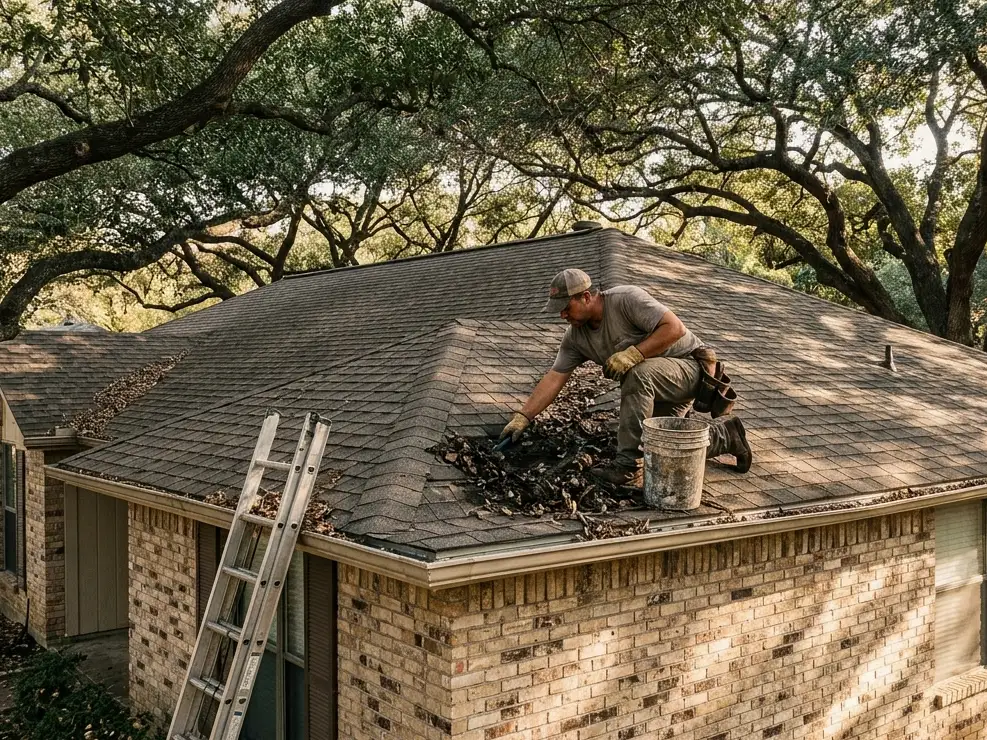
What shortens a roof's life
Poor attic ventilation is the quiet killer. When hot air can't escape, the underside of the decking stays hot well into the night, and shingles age faster than they should. Insulation blown over soffit vents, a mix of exhaust types that short-circuit each other, or simply too few vents can take years off a roof.
Trees cause their own problems. Overhanging branches scrape shingles in the wind, drop leaves that hold moisture in valleys and gutters, and keep slopes shaded so algae grows. Low-pitch sections drain slowly and wear faster. A roof installed over an old layer runs hotter and has less to grip. And small installation shortcuts, like reused flashing or missing starter strips, show up as early failures years later.
Foot traffic counts too. Satellite installers, holiday light hangers and HVAC techs walking the roof in July heat can scuff granules off softened shingles and crack brittle ones. If someone needs to be up there, ask them to keep to the ridge and avoid stepping in valleys.
The parts that wear out first
A roof doesn't age evenly. Some details fail years before the main field of shingles, and watching them is the cheapest way to stretch a roof's life. When we inspect an older roof, these are the first places we look, because replacing a cracked pipe boot costs a fraction of a leak repair and catching a valley problem early can save the decking beneath it.
- Pipe boots and vent collars: the rubber cracks in the sun, often long before the shingles wear out
- Sealant at flashing and chimneys: it dries, shrinks and pulls away, letting water slip behind
- Ridge cap shingles: they sit highest and take the most sun and wind
- South- and west-facing slopes: they take the hardest afternoon sun and usually show wear first
- Valleys: they carry the most water and collect debris, so they wear faster under trees
Signs a roof is near the end
You don't have to wait for a leak to know a roof is getting tired. From the ground, look for shingles that have curled at the edges or cupped in the middle, dark bare patches where granules have worn away, and heavy granule piles in the gutters after normal rain. Cracks running across shingles and edges that have broken off are signs the asphalt has lost its flexibility.
Inside, check the attic on a sunny afternoon. Pinpoints of daylight, dark stains on the decking, or a musty smell all point to trouble. Sagging between rafters means the decking may be failing. Any one of these deserves a closer look, and several together usually mean it's time to start planning a replacement rather than chasing repairs.
How to get more years from your roof
Most of what extends a roof's life is simple and inexpensive. Keep gutters clear so water doesn't back up under the edge shingles. Trim branches back so they don't touch the roof. Fix small flashing and vent boot problems early, before water reaches the decking. Make sure the attic actually breathes, with clear soffit intake and a single type of exhaust working as designed.
Get the roof inspected after any significant hail or wind event, even if you don't see damage from the ground. Bruised shingles that go unnoticed can leak a year later, and by then a claim may be harder to tie to a storm. A routine check every couple of years on an older roof catches loose fasteners and cracked sealant before they turn into ceiling stains.
Planning for the next roof
If your roof is in the last third of its expected life, start setting money aside and gathering estimates before you're forced into a decision. Replacing on your own timeline lets you compare materials, get HOA approval without rushing and avoid the scheduling crunch that follows a big spring hailstorm, when every crew in the metro is booked.
Late summer through winter is often the easiest time to schedule a planned replacement in Dallas. If you'd like a realistic estimate of how many years your roof has left, call us at (214) 910-6728 and our crew will take a look.
Questions homeowners ask
Does a lighter shingle color make a roof last longer in Dallas?
Lighter colors absorb a little less heat, which can help both shingle aging and attic temperature, but the effect is modest compared to good ventilation and storm exposure. Pick a color you like and your HOA allows, then make sure the attic vents properly. That combination does more for lifespan than color alone.
Why does my shingle warranty say 30 years or more if roofs here last less?
Manufacturer warranty terms depend on the product line and installer registration, and they're written for a wide range of climates. They also usually exclude hail and require proper ventilation. The printed number is a product rating, not a promise of how long a roof will last on a Dallas house through repeated heat and storms.
Do roofs on two-story homes wear out faster than single-story roofs?
Not because of the height itself. What matters more is exposure: a two-story roof often sits above the tree line, getting full sun and wind. Single-story roofs under big oaks get more shade but deal with debris and moisture. Each wears differently, so inspections should focus on the stresses that house actually faces.