The options in plain terms
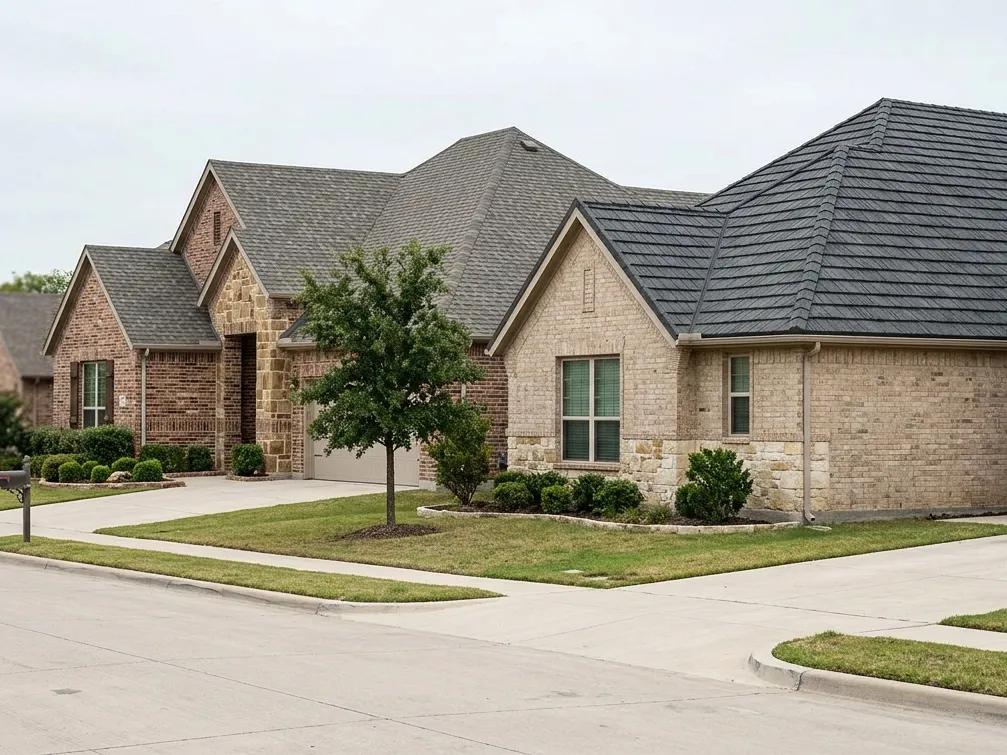
Asphalt shingles cover most homes in Dallas, and for good reason. Architectural shingles are affordable, easy to repair, come in dozens of colors and suit nearly every house style from a 1950s ranch in Casa Linda to a new build in Frisco. Impact-resistant Class 4 versions add hail resistance for a moderate upcharge.
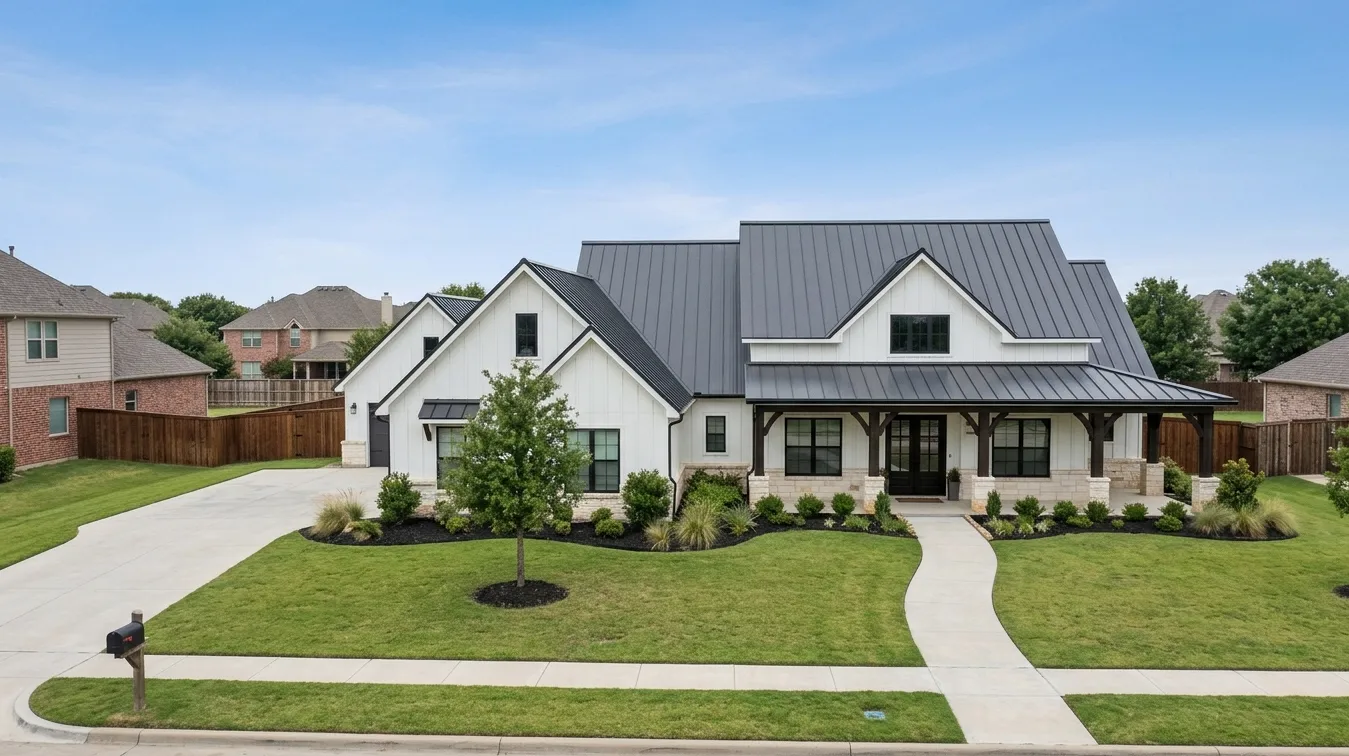
Metal for homes mostly means two things here. Standing seam panels run from ridge to eave with raised seams and hidden fasteners, giving a clean, modern line. Stone-coated steel is pressed into shingle, shake or tile shapes and coated with granules, so it looks like a traditional roof while carrying the strength of steel. Exposed-fastener panels are common on barns and shops but are less suited to most homes.
What each costs up front
Shingles win on price. Here are typical installed ranges in the Dallas-Fort Worth market, before decking repairs or unusual roof complexity. The gap narrows when you look at the full life of the roof: a standing seam roof that lasts two or three times as long as shingles may cost less per year of service, as long as you stay long enough to see it. If you're likely to move within a decade, the next owner gets much of that value, though a newer metal roof can still help a listing.
- Architectural asphalt shingles: about $5.15 to $7.40 per square foot
- Class 4 impact-resistant shingles: about $6.05 to $8.65 per square foot
- Stone-coated steel: about $9.40 to $13.85 per square foot
- Standing seam metal: about $10.85 to $16.40 per square foot
Hail: dents versus damage
Metal doesn't crack the way shingles bruise, and many metal products carry a Class 4 impact rating. But a thin standing seam panel can dent in a strong hailstorm, and dents on a smooth panel are visible from the street. Thicker gauges resist dents better, and stone-coated steel hides small dents under its textured surface.
Here's the part to check before you buy. Many insurers attach a cosmetic damage exclusion to metal roofs, which means dents that don't let water in may not be covered. The roof keeps working, but you live with the look. Shingles that take enough hail to bruise are usually treated as functional damage. Ask your agent how your policy handles metal before you commit.
Repairs work differently too. A damaged shingle can be lifted and replaced in an afternoon. A damaged standing seam panel usually has to be replaced from ridge to eave, and matching an older finish can be tricky. Stone-coated steel panels are smaller and easier to swap, which is one reason they're popular in hail country.
Heat, energy and noise
Metal with a reflective finish sends more of the sun's heat back into the sky, which keeps the roof surface and the attic cooler than a dark shingle. With attic temperatures that often exceed 140°F under a standard roof, that can ease the load on an air handler and ductwork sitting in the attic. Lighter shingle colors and good ventilation help too, just not as much. Some shingle lines carry reflective granules that bounce back more sunlight while keeping a traditional look, and pairing any roof with balanced attic ventilation does as much for summer comfort as the material itself.
Noise worries a lot of people, and it's mostly a myth for homes. Residential metal goes over solid decking and underlayment, with an insulated attic below, so rain sounds much like it does on shingles. The loud tin roof people remember is usually a barn panel screwed directly to open purlins with nothing underneath.
Looks, HOAs and resale
Standing seam has a distinct look that suits modern farmhouse, contemporary and some ranch styles well, and looks out of place on others. Stone-coated steel blends into a traditional neighborhood more easily. Shingles fit almost anywhere. Many suburban HOAs list approved roof materials and colors, and some restrict or require review for metal, so check your covenants before getting attached to a design. Finish color matters with metal as well. Lighter and mid-tone finishes reflect more heat, while darker ones run hotter. Ask to see full-size samples outside in daylight, since a small chip rarely looks the same as a whole roof.
For resale, buyers in Dallas generally see a newer roof as a plus no matter the material. Metal can be a selling point for buyers who know its lifespan, while shingles keep the price of the house in line with the rest of the street. Neither is a bad choice if it suits the house and the neighborhood.
Which one fits your house
The right answer depends on how long you'll stay, your budget and your tolerance for cosmetic dents. Use these as a starting point:
- Staying ten years or more and want the longest life: standing seam or stone-coated steel
- Want hail resistance with a traditional look at a lower price: Class 4 shingles
- Tight budget or selling within a few years: architectural shingles
- Strict HOA or historic look: shingles or stone-coated steel in an approved style
- Low-slope sections or a porch roof: standing seam handles low pitch well
Ask for both prices
The best way to decide is to see real numbers for your roof side by side, including tear-off, decking, flashing and trim. A roof with lots of valleys, dormers and penetrations costs more to do in metal because every cut and flashing detail takes time. A simple gable roof narrows the gap. Bring your insurance questions to the same meeting. Knowing whether your carrier applies a cosmetic exclusion to metal, or offers a discount for an impact-rated roof, can tip the decision before you spend a dollar. If you'd like a shingle and metal estimate on the same visit, call us at (214) 910-6728.
Questions homeowners ask
Can metal roofing go over my existing shingles?
In some cases it's possible, but we usually recommend tearing off first on Dallas homes. Removing the old roof lets the crew check and repair decking, install fresh underlayment and avoid trapping heat between layers. It also keeps the roof lighter and avoids hidden problems that would otherwise sit under a roof meant to last decades.
Does a metal roof attract lightning?
No. Metal doesn't make a house more likely to be struck. Lightning seeks the tallest path to ground, not a particular material. If a metal roof is struck, it spreads the energy and doesn't burn, which is one reason it's considered a low fire risk. Lightning protection is a separate system if you want it.
How do solar panels work with a standing seam roof?
Standing seam pairs well with solar because clamps attach to the raised seams without drilling through the panels. That means fewer roof penetrations than a typical shingle install. If you plan solar in the next few years, mention it when pricing the roof so seam spacing and layout can account for the array.