Safety comes first
Dallas has seen how fast a storm can turn serious. The October 20, 2019 EF-3 tornado tore through North Dallas neighborhoods around Preston Hollow and Walnut Hill, and the May 28, 2024 windstorm brought gusts over 80 mph across the city. After storms like those, the first job is making sure everyone is safe, not checking the shingles.
Walk the outside of the house from a distance. Stay clear of downed power lines and anything touching them, and call Oncor or 911 if lines are down. Don't climb onto the roof, especially when it's wet or dark. Inside, stay out of rooms where the ceiling is sagging or wet, and don't go into the attic until you know the decking and joists are sound.
Slow the water down inside
If water is coming in, a few quick steps limit the damage. None of them need tools or a ladder.
- Move furniture, electronics, rugs and anything valuable away from drips
- Set out buckets, pans or storage bins, with towels around them to catch splashes
- If a ceiling is bulging with water, poke a small hole at the lowest point with a screwdriver over a bucket to let it drain in a controlled way
- Turn off power to rooms where water is near light fixtures or outlets, at the breaker panel
- Open cabinets and closets near the leak so wet areas can start to dry
Photograph everything before it changes
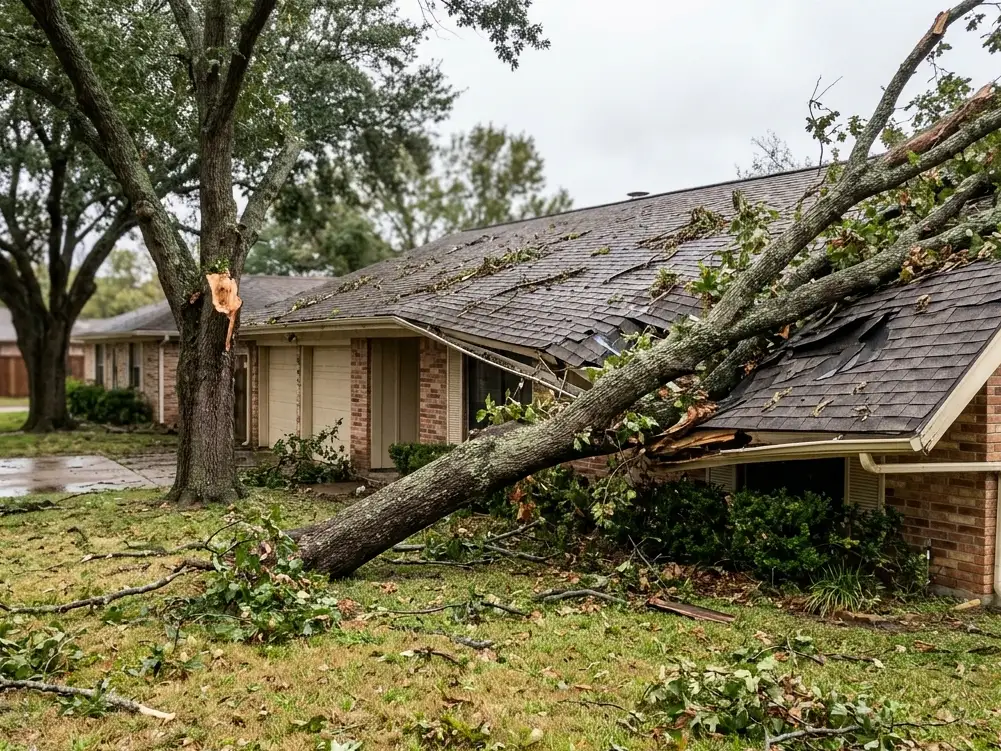
Before anyone tarps the roof or cleans up, take photos and video. Get wide shots of each side of the house from the yard, then close-ups of missing shingles, fallen limbs, dented gutters and anything else that looks wrong. Inside, photograph water stains, wet carpet, damaged belongings and the buckets catching drips. Your phone records the date and time automatically, which helps.
If hail fell, photograph a few stones next to a coin or ruler before they melt. Keep damaged items rather than throwing them out right away, since an adjuster may want to see them. Put everything in one folder or album so you can share it easily when the claim starts. Add a short note on the same day: when the storm hit, when you first noticed the leak and what you did about it. A few sentences written that day carry more weight than a recollection weeks later.
Get the roof covered
Most homeowner policies expect you to take reasonable steps to prevent further damage after a loss. In practice, that usually means getting an emergency tarp on the roof or boarding up an opening as soon as possible. Waiting several days while rain keeps coming in can make the inside damage much worse and complicate the claim.
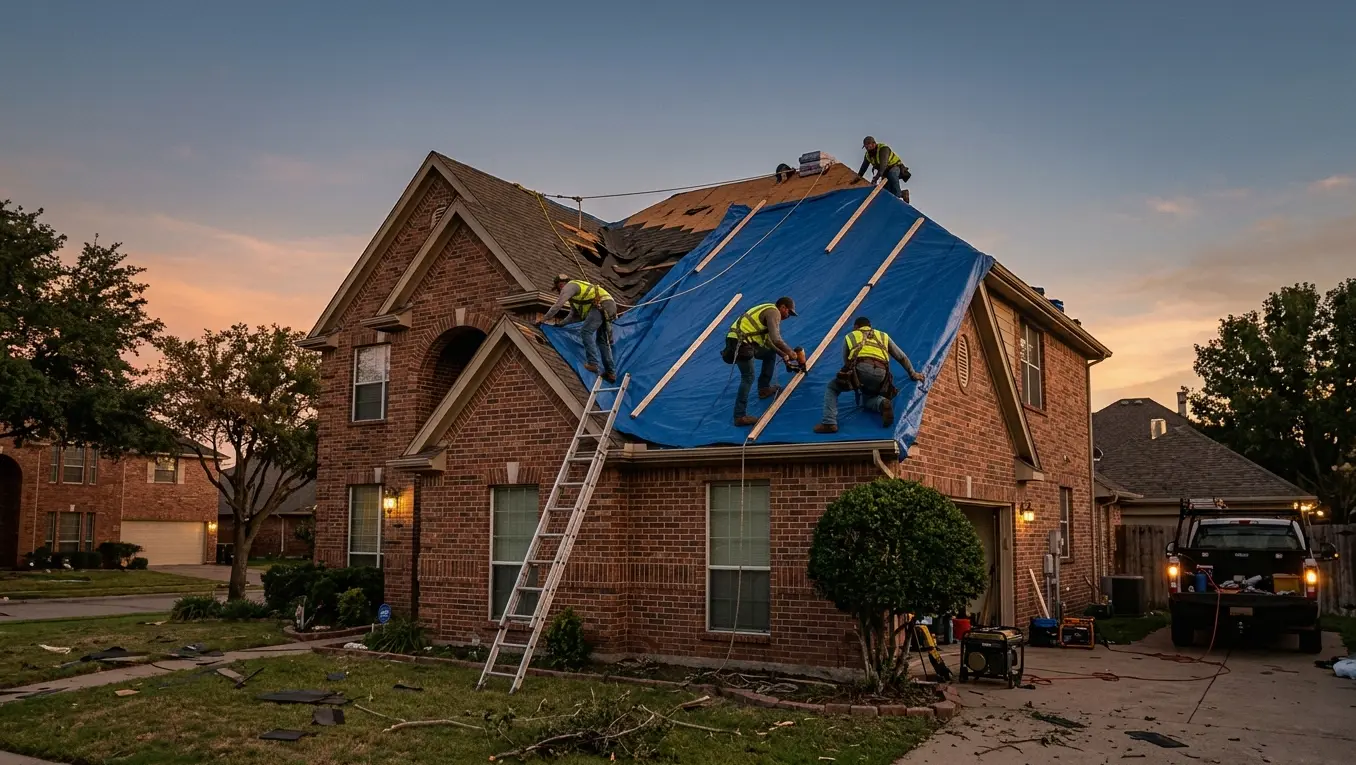
A proper emergency tarp is secured with battens and fasteners that don't open new leaks, and it extends over the ridge so water runs off rather than under. Typical emergency tarping in Dallas runs about $385 to $1,150 depending on the size of the opening and roof pitch. Keep the invoice and photos of the tarp in place, because reasonable protection costs are often part of a covered claim.
If a tree is lying on the roof, it has to come off before a tarp can go on, and that usually takes a tree crew with the right equipment. Don't try to cut a limb that's resting on the roof from below, since it can shift or roll as the weight comes off.
Start your claim and your notes
Call your insurance company or use their app to report the damage and get a claim number. Write down the date, the name of anyone you spoke with and what they told you. Ask when an adjuster will be assigned and whether they need anything before the inspection. After a big storm, adjusters can be booked for days or weeks, so getting in line early matters.
Keep a simple log from here on: calls, emails, receipts for tarps, hotel stays if the house isn't livable, and any repairs. It feels tedious in the moment, but it saves real time and money later. Have your roofer present when the adjuster inspects if you can, so both sides look at the same damage together.
The next few days
Once the first day is behind you, the work shifts from stopping damage to planning the repair. Get two or three written estimates from local companies, ideally ones with a Dallas-area office you can visit. Ask each for photos and a line-item scope you can compare, and share the same photos with your adjuster so everyone works from the same picture.
Keep checking the inside of the house as it dries. Watch ceilings and walls near the leak for new stains, bubbling paint or a musty smell over the next week, since water can travel along rafters and show up in a different room. Check the attic once it's safe for wet insulation or dark decking. If the adjuster's estimate seems to miss damage your roofer found, ask for a reinspection and send the photos with your request. A calm, documented follow-up settles most of these questions.
What not to do in the first day
Storms bring door-knockers within hours. Some are honest local crews, and some are out-of-town operators who disappear after the work is done. In the first rushed day, avoid decisions you can't take back. Don't sign a contract on the spot, don't pay a large deposit for work that hasn't started and don't sign over insurance payments to anyone.
Also don't attempt your own roof repairs on a wet, damaged roof, and don't start tearing out wet drywall or flooring before it's been photographed. If your roof is open to the weather and you need a tarp tonight, our crews answer 24/7 at (214) 910-6728.
Questions homeowners ask
Should I stay in the house if the roof is leaking after a storm?
Usually yes, if the structure is sound, the power is safe and the leak is limited to a few spots you can catch. Leave if ceilings are sagging badly, wiring is wet, you smell gas or a tree has come through the roof. Additional living expenses may be part of your coverage, so keep receipts if you go.
How do I keep wet insulation and drywall from causing mold?
Speed matters. Get the roof covered, then dry the area with fans and a dehumidifier, and open walls or ceilings only after photographing them. Insulation that stays soaked for more than a day or two usually needs removal. Large or lingering wet areas are worth a call to a water mitigation company to dry them properly.
Can I tarp the roof myself to save money?
If the roof is low, dry and gently sloped, some homeowners do, but it's risky work. A tarp that isn't secured properly can blow off in the next gust or channel water under it. On a two-story or steep roof, or after dark, leave it to a crew with fall protection and the right fasteners.