What's happening in your attic in July
On a sunny Dallas summer afternoon, attic temperatures often exceed 140°F. The sun heats the shingles, the shingles heat the decking, and the decking radiates that heat down into the attic space. Without a way out, the heat builds hour after hour and keeps the decking hot well into the night.
Most Dallas homes also have their air handler and ductwork in the attic. That means the cold air your system works to make travels through ducts sitting in an oven, and any small leak or thin insulation loses cooling before it reaches the rooms. A well-ventilated attic still gets hot, but it runs cooler than a stuffy one and lets heat bleed off faster after sunset. Two-story homes can have it worse, since the upstairs ceiling sits right under the hottest air.
How a vented attic is supposed to work
A vented attic works like a chimney. Cooler outside air enters low, through intake vents in the soffits under the eaves. As the air warms, it rises and leaves high, through exhaust vents at or near the ridge. That steady flow carries heat and moisture out of the attic and pulls fresh air in behind it.
The key is balance. A common rule of thumb is about 1 square foot of net free vent area for every 300 square feet of attic floor, split roughly evenly between intake and exhaust, with the exact requirement depending on the roof design and vapor barrier. Too much exhaust and too little intake makes exhaust vents pull air from the house itself, including cooled air through ceiling gaps and light fixtures.
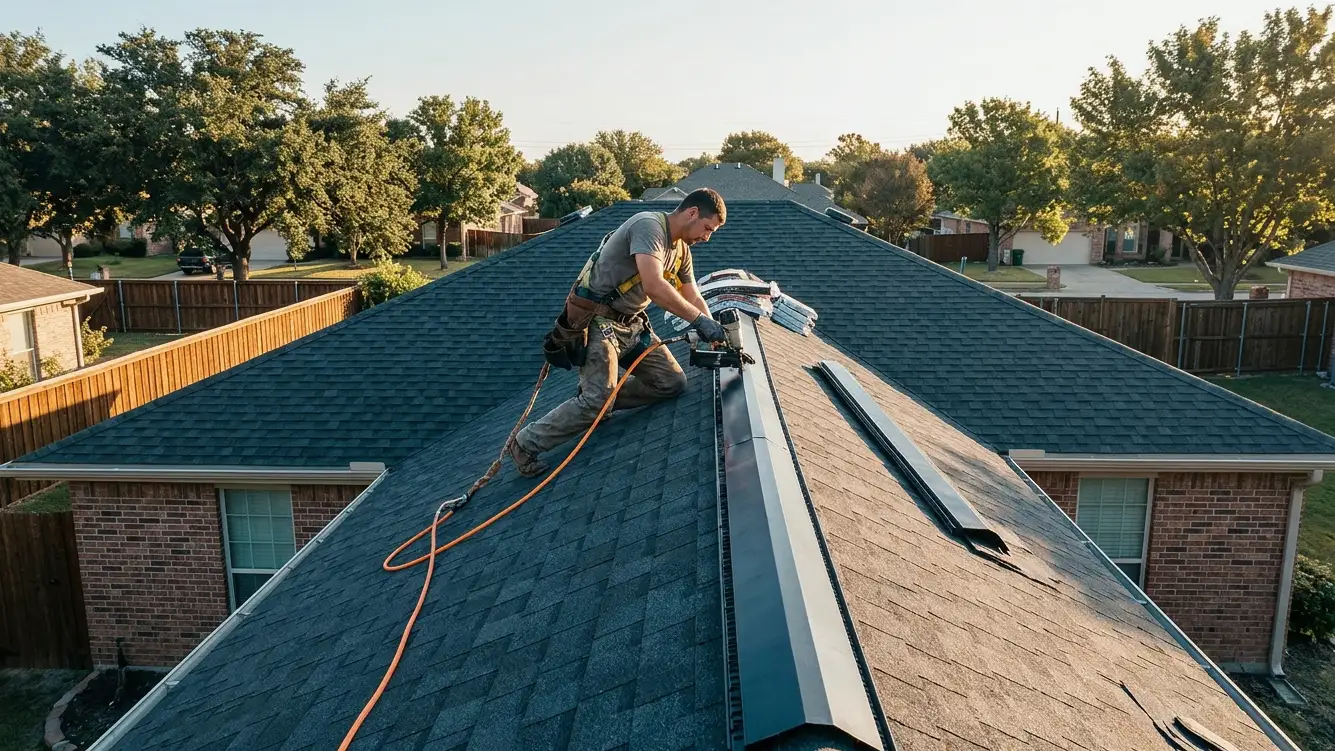
Ridge vents paired with continuous soffit vents are the most common setup on Dallas homes being reroofed today, because they move air evenly along the whole roof. Many older homes rely on a row of box vents near the ridge instead, which can work well if there are enough of them and the soffits underneath are open.
Common problems in Dallas attics
When we look in attics around Dallas, the same issues show up again and again. Most are simple to fix once someone spots them.
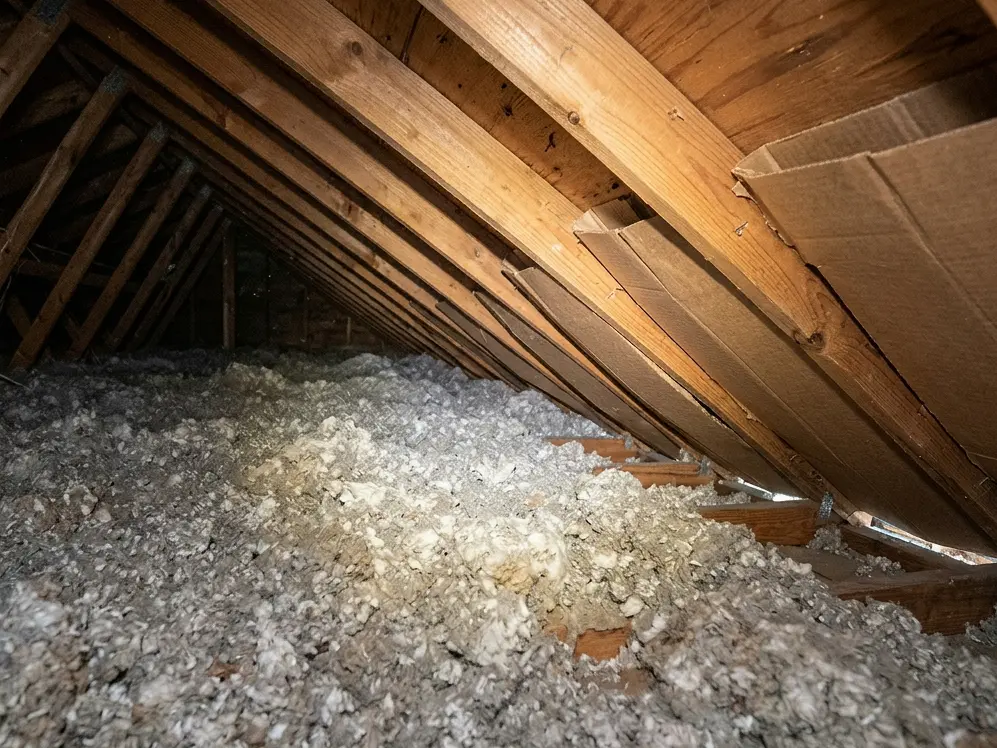
- Soffit vents buried under blown-in insulation, so no air can enter low
- Soffit vents painted over or blocked by solid soffit panels during an old remodel
- Mixed exhaust types, such as a ridge vent plus gable vents or a power fan, which short-circuit each other
- Too few box vents for the size of the attic
- Ridge vent installed without cutting the decking slot wide enough underneath
- Bathroom or kitchen fans venting into the attic instead of outside
What poor ventilation costs you
The roof pays first. Shingles that sit over a superheated deck lose oils faster, turn brittle sooner and start curling and cracking years before they should. Many manufacturer warranties also require proper attic ventilation, and warranty terms depend on the product line and installer registration, so a poorly vented attic can create problems if you ever need to make a claim on the shingles.
Your cooling bill pays next. Ducts in a hot attic lose more energy, and the system runs longer to keep up. In winter, poor ventilation lets warm, moist air from the house condense on the cold underside of the decking. Dallas winters are mild, but cold snaps happen, and that moisture can lead to stained decking, rusted nails and mold in corners where air doesn't move.
Fixes and what they typically cost
Ventilation fixes are usually modest compared to the cost of a roof. Typical Dallas price ranges look like this, depending on the size and layout of the attic:
- Clearing blocked soffits and installing insulation baffles: about $315 to $890
- Adding or replacing soffit intake vents: about $425 to $1,180
- Installing a ridge vent with a properly cut slot: about $485 to $1,240
- Closing off conflicting gable or box vents: about $185 to $560
- Rerouting a bath fan to vent outside: about $265 to $640
Signs your attic isn't breathing
You don't need instruments to spot a ventilation problem. Most of the clues show up in the house, on the roof or in the attic itself. None of them proves ventilation is the cause on its own, but two or three together are a strong hint, and an inspection that checks intake, exhaust, insulation depth and bath fan routing usually finds the answer in under an hour.
- Upstairs rooms that stay much warmer than the rest of the house on summer evenings
- An air conditioner that runs nearly nonstop through the late afternoon
- Shingles on a fairly young roof that are curling or shedding granules early
- Rusty nail tips or dark stains on the underside of the decking
- Damp spots or frost on the decking during a winter cold snap
- A musty smell or visible mold in the corners of the attic
When to deal with it
The best time to fix ventilation is during a roof replacement, when the decking is open and adding a ridge vent or closing old vents costs the least. If your roof still has plenty of life, it's still worth fixing intake problems and venting bath fans outside now, since those cost little and protect both the roof and the attic. Don't add vents blindly, though. Cutting extra holes without checking the balance can make the problem worse, and every new opening is one more place for water to find.
You can do a quick check yourself. Look at the eaves from outside for vents, then peek in the attic with a flashlight and see whether insulation covers the soffit areas. If the attic feels hot and stale, or you see daylight only at the ridge with nothing at the eaves, the system is likely unbalanced. If you'd like our crew to look it over, call us at (214) 910-6728.
Questions homeowners ask
Will a solar-powered attic fan help my Dallas attic?
It can, but only in the right setup. An attic fan pulls hard, and if intake is limited it draws air from the house or from nearby vents instead of the soffits. It also shouldn't run alongside a ridge vent. When soffit intake is strong and the fan is the only exhaust, it can work well. Otherwise, balanced passive vents are usually better.
Should I seal my attic with spray foam instead of venting it?
Spray foam on the underside of the roof deck creates an unvented, conditioned attic, which can work well in Texas when designed correctly. It's a different approach, not an add-on, and existing vents must be closed. Check with your shingle manufacturer about warranty terms over unvented decks before you commit.
Does adding more insulation fix a hot attic?
Insulation slows heat moving from the attic into your living space, but it doesn't remove heat from the attic itself. You need both: insulation on the attic floor to protect the rooms and ventilation to carry heat away from the roof deck. Just keep new insulation clear of the soffit vents with baffles.